Top City Bank Services in USA for Small Business & Personal Banking
By International News Gateway
Updated: March 2026
Category: Banking & Personal Finance
Choosing a bank in the United States is no longer simply a decision between opening a checking or savings account at the nearest branch. Consumers and small-business owners can choose from national banks, regional institutions, community banks, credit unions, and online banking providers, each offering different combinations of accounts, digital tools, fees, lending products, and customer support.
For a small-business owner, the right banking relationship may include business checking, payment processing, payroll support, business credit cards, merchant services, and access to financing. For personal customers, important considerations may include checking and savings fees, ATM access, mobile banking, direct deposit, overdraft policies, and account security.
There is no single bank that is best for everyone. The most suitable option depends on how you use your account, where you live, how much you keep on deposit, and which services you actually need.
This guide explains the major types of banking services available in the USA and provides practical factors to consider when comparing banks for personal and small-business needs.
Important: This article is general educational information, not personalized financial advice. Bank products, rates, fees, eligibility requirements, and account terms can change. Always review the current disclosures and terms directly with the financial institution before opening an account or applying for credit.
What Are Bank Services in the USA?
Banking services cover a broad range of products designed to help individuals and businesses manage money.
Common personal banking services include:
- Checking accounts
- Savings accounts
- Certificates of deposit (CDs)
- Debit cards
- Online and mobile banking
- Direct deposit
- Bill payment
- Domestic and international transfers
- ATM services
- Personal loans
- Mortgages
- Credit cards
Small businesses may also use:
- Business checking accounts
- Business savings accounts
- Merchant services
- Payment processing
- Business credit cards
- Payroll services
- Business lines of credit
- Commercial loans
- Cash-management tools
- Invoicing and accounting integrations
The availability of each service depends on the institution and the customer’s eligibility.

How to Compare Banks for Personal Banking
The biggest bank is not necessarily the best choice for every customer. Before opening an account, compare the features that matter most to your financial situation.
1. Monthly Account Fees
Some checking and savings accounts charge monthly maintenance fees. Others have no monthly fee or allow customers to avoid the fee by meeting specific conditions.
For example, a bank may waive a monthly charge if you:
- Maintain a minimum balance
- Receive qualifying direct deposits
- Meet a transaction requirement
- Maintain multiple accounts with the institution
Don’t look only at the advertised monthly fee. Read the account disclosure to understand how the fee can be avoided and what other charges may apply.
2. ATM Availability
ATM access can be particularly important for customers who regularly use cash.
When comparing banks, consider:
- Number of in-network ATMs
- Out-of-network ATM fees
- ATM reimbursement policies
- Cash deposit availability
- ATM withdrawal limits
A bank with a lower monthly fee may not be the most economical choice if you frequently pay ATM charges.
3. Mobile and Online Banking
Digital banking has become an important part of everyday money management.
Useful features can include:
- Mobile check deposit
- Account alerts
- Card controls
- Bill payment
- Transfer tools
- Digital statements
- Transaction notifications
- Secure messaging
Customers should also consider how easy it is to contact the bank when a problem cannot be resolved through the app.
4. Savings Rates and Account Terms
If your priority is building savings, compare the annual percentage yield (APY), minimum balance requirements, withdrawal rules, and fees.
A higher advertised APY does not automatically make an account better. Check whether the rate is promotional, whether it applies to your entire balance, and whether other requirements apply.
Rates can change on many deposit accounts, so verify the current rate before opening an account.

FDIC Insurance Matters
One of the most important questions when choosing a bank is whether deposits are insured.
The Federal Deposit Insurance Corporation (FDIC) provides deposit insurance for deposits at FDIC-insured banks, subject to applicable coverage limits and rules. The standard coverage amount is generally $250,000 per depositor, per insured bank, for each ownership category.
Customers should verify that the institution and specific account are covered rather than assuming every financial product carries FDIC insurance.
FDIC insurance generally applies to qualifying deposit accounts, not investments such as stocks, bonds, mutual funds, or cryptocurrency.
Banking Services for Small Businesses
Small businesses often need more than a basic checking account.
A business account can help separate company finances from personal spending and make bookkeeping easier.
Depending on the business, useful services may include business checking, savings, payment acceptance, payroll, invoicing, business credit cards, and lending.
Business Checking Accounts
A business checking account is generally used for routine company transactions.
It may be used to:
- Receive customer payments
- Pay suppliers
- Pay employees
- Cover operating expenses
- Transfer money between business accounts
- Manage recurring payments
When comparing business checking accounts, examine transaction limits, monthly fees, cash-deposit charges, wire fees, and minimum balance requirements.
Merchant and Payment Services
Businesses that accept debit or credit cards need a payment-processing solution.
Some banks provide merchant services directly, while others integrate with third-party payment platforms.
Before choosing a payment system, compare:
- Transaction fees
- Monthly charges
- Hardware costs
- Settlement times
- Contract terms
- Chargeback procedures
- Supported payment methods
The cheapest advertised rate may not represent the lowest overall cost for your particular business.
Business Credit Cards
A business credit card can separate company purchases from personal spending and simplify expense tracking.
Features vary considerably between cards. Businesses should compare:
- Annual fees
- Interest rates
- Rewards
- Introductory offers
- Employee-card options
- Spending controls
- Reporting tools
A rewards program should not be the primary reason to take on debt that the business cannot comfortably repay.
Business Loans and Lines of Credit
Banks may offer several forms of business financing.
Common examples include:
- Term loans
- Business lines of credit
- Commercial real estate financing
- Equipment financing
- Small-business credit cards
- SBA-related financing through participating lenders
Eligibility depends on factors such as the business’s financial history, revenue, credit profile, collateral, industry, and the lender’s underwriting requirements.
There is no guaranteed approval time or loan amount. Businesses should compare the total cost of financing, including interest, fees, repayment terms, and other contractual requirements.

National, Regional, Community, and Online Banks
American consumers have several types of institutions to consider.
National Banks
Large national banks typically offer extensive branch and ATM networks along with a broad range of consumer and business products.
They may be convenient for customers who travel frequently or operate businesses across multiple states.
The trade-off can be more complex fee structures or less personalized service, depending on the institution and account.
Regional Banks
Regional banks generally operate across multiple states or a particular geographic area.
They may combine physical branches with digital services and can be worth considering for customers who prefer a regional institution with local market knowledge.
Community Banks
Community banks often focus on specific cities, towns, or regions.
A small-business owner who values face-to-face relationships may prefer a local institution, particularly when seeking commercial banking or business lending.
However, digital features and geographic coverage can differ significantly between institutions.
Online Banks
Online banks generally operate with fewer or no traditional branches.
Lower operating costs can allow some online institutions to offer competitive account features, although customers who regularly need cash deposits or in-person assistance may prefer a bank with physical locations.
What About Credit Unions?
Credit unions are another option for consumers and businesses.
Unlike banks, credit unions are member-owned financial cooperatives. Eligibility requirements vary by institution.
Some credit unions may offer competitive deposit rates or loan terms, while others may have smaller branch and ATM networks.
When comparing a credit union with a bank, consider:
- Membership requirements
- Deposit insurance
- Account fees
- ATM access
- Digital banking
- Loan products
- Customer service
The National Credit Union Administration (NCUA) provides federal share insurance for qualifying deposits at federally insured credit unions, subject to applicable limits.
Digital Payments and Faster Transfers
Banking customers increasingly expect money to move quickly.
Depending on the bank and service, customers may have access to:
- ACH transfers
- Wire transfers
- Person-to-person payments
- Debit-card payments
- Real-time payment services
- Mobile payment platforms
Real-time payment systems can move eligible payments much faster than traditional ACH transfers, but availability, transaction limits, fees, and eligibility depend on the participating financial institution and service.
The Federal Reserve’s FedNow Service is one example of infrastructure supporting instant payments in the United States. It does not mean every bank account automatically supports every real-time payment feature.
Banking Security and Fraud Protection
Security should be part of any bank comparison.
Look for features such as:
- Two-factor authentication
- Real-time transaction alerts
- Card lock and unlock controls
- Fraud monitoring
- Secure account notifications
- Biometric login
- Encryption and other security measures
Customers should also protect their own accounts by using strong, unique passwords and avoiding suspicious links or requests for login information.
A bank will never eliminate every possibility of fraud, so account monitoring remains important.
Banking for Newcomers to the United States
People who are new to the United States may have additional questions about opening a bank account.
Requirements differ between financial institutions. A bank may request identification, an address, tax information, or other documentation.
Some institutions may accept an Individual Taxpayer Identification Number (ITIN), while others may have different identification requirements.
Do not assume that one bank’s requirements apply to every bank.
Before visiting a branch, contact the institution or check its official account-opening requirements so you know which documents to bring.

How to Choose the Right Bank
Instead of asking which bank is universally “the best,” start by identifying your own priorities.
If you are a personal customer, consider:
- Monthly fees
- Savings APY
- ATM access
- Mobile banking
- Direct deposit options
- Overdraft policies
- Customer support
- Deposit insurance
If you own a small business, consider:
- Business account fees
- Transaction limits
- Cash-deposit costs
- Payment processing
- Payroll integration
- Accounting integrations
- Business credit cards
- Lending options
- Branch access
The right choice may be different for a freelancer, restaurant owner, online seller, professional service provider, or growing company.
A Simple Bank Comparison Checklist
Before opening an account, ask:
- Is the institution FDIC-insured or otherwise appropriately insured?
- What monthly fees apply?
- How can those fees be waived?
- Are there minimum balance requirements?
- What ATM fees apply?
- What are the transfer limits?
- What APY is currently offered on savings?
- Can I deposit cash if necessary?
- What mobile banking features are available?
- What customer support options are provided?
- What business services are available if I operate a company?
- Are there additional fees for wires, checks, or payment processing?
The FDIC recommends considering factors such as insurance, fees, and account requirements when choosing a bank account.
Avoid Choosing a Bank Based Only on a Bonus
Bank account bonuses can be attractive, but they should not be the only consideration.
A promotional offer may require:
- A qualifying direct deposit
- A minimum balance
- A certain number of transactions
- Maintaining the account for a specified period
Always read the official terms before opening an account.
A temporary bonus may be worth less to you than a bank with lower ongoing fees, better ATM access, or services that fit your daily needs.
Related Reading on International News Gateway:
Best Banks in USA for Beginners (2026 Guide)
Be Careful With Financial Claims Online
Financial products can affect a person’s savings, credit, and financial stability. Readers should be cautious about articles or advertisements promising unusually high returns, guaranteed approvals, instant wealth, or risk-free investments.
Google’s advertising policies specifically address misleading and unreliable financial claims and emphasize transparency around financial products and services.
International News Gateway does not guarantee that any bank, account, loan, rate, bonus, or financial product will be available to every reader.
Frequently Asked Questions
Which bank is best for small businesses in the USA?
There is no single bank that is best for every small business. Compare business checking fees, transaction limits, payment services, branch availability, accounting integrations, and financing options based on your company’s needs.
What should I look for in a personal checking account?
Start with monthly fees, minimum balance requirements, ATM access, overdraft policies, mobile banking features, customer service, and deposit insurance.
Are online banks safe?
An online bank can be a legitimate option, but customers should verify the institution’s regulatory status and applicable deposit insurance before opening an account.
Is my money automatically FDIC-insured?
Not necessarily. Confirm that the bank is FDIC-insured and that the specific account qualifies for coverage. Coverage is subject to legal limits and ownership rules.
Can a small business use a personal bank account?
Business owners should understand the legal, tax, accounting, and banking implications before mixing personal and business finances. A dedicated business account can make business transactions easier to track, but the appropriate structure depends on the business and its circumstances.
Should I choose a traditional bank or an online bank?
Traditional banks may be preferable for people who value branches and in-person service. Online banks may appeal to customers who primarily manage their finances digitally. Compare the actual features and costs rather than choosing based solely on the type of institution.
Can I open a U.S. bank account as a non-U.S. citizen?
Possibly. Requirements vary significantly among financial institutions. Banks may request identification, address information, tax documentation, and other records. Contact the institution directly before applying.

Final Takeaway
The best banking relationship is not necessarily the one with the largest branch network, the highest advertised rate, or the biggest introductory bonus. It is the one whose fees, services, technology, accessibility, and account requirements match your financial needs.
Personal customers should pay particular attention to account fees, savings rates, ATM access, digital banking, and deposit insurance. Small-business owners should look beyond checking accounts and evaluate payment processing, cash management, accounting integrations, credit products, and financing options.
Before opening an account, read the institution’s current disclosures and pricing information. Banking products can change, and promotional rates or bonuses may have eligibility requirements.
For financial decisions involving significant amounts of money, consider obtaining advice from a qualified financial professional who can evaluate your individual circumstances.
Editorial Disclaimer
International News Gateway provides this article for general educational and informational purposes only. It is not financial, investment, tax, legal, or banking advice.
Bank account availability, interest rates, fees, eligibility requirements, insurance coverage, lending criteria, and promotional offers can change without notice. Products and services may also differ by state, customer, business type, and financial institution.
Readers should verify current information directly with the relevant bank, credit union, government agency, or financial professional before making financial decisions.
International News Gateway does not guarantee approval for any bank account, credit product, loan, investment, or financial service and does not guarantee any particular rate, return, savings amount, or financial outcome.
If a specific bank or financial product is mentioned, readers should review that provider’s official terms and disclosures before applying.
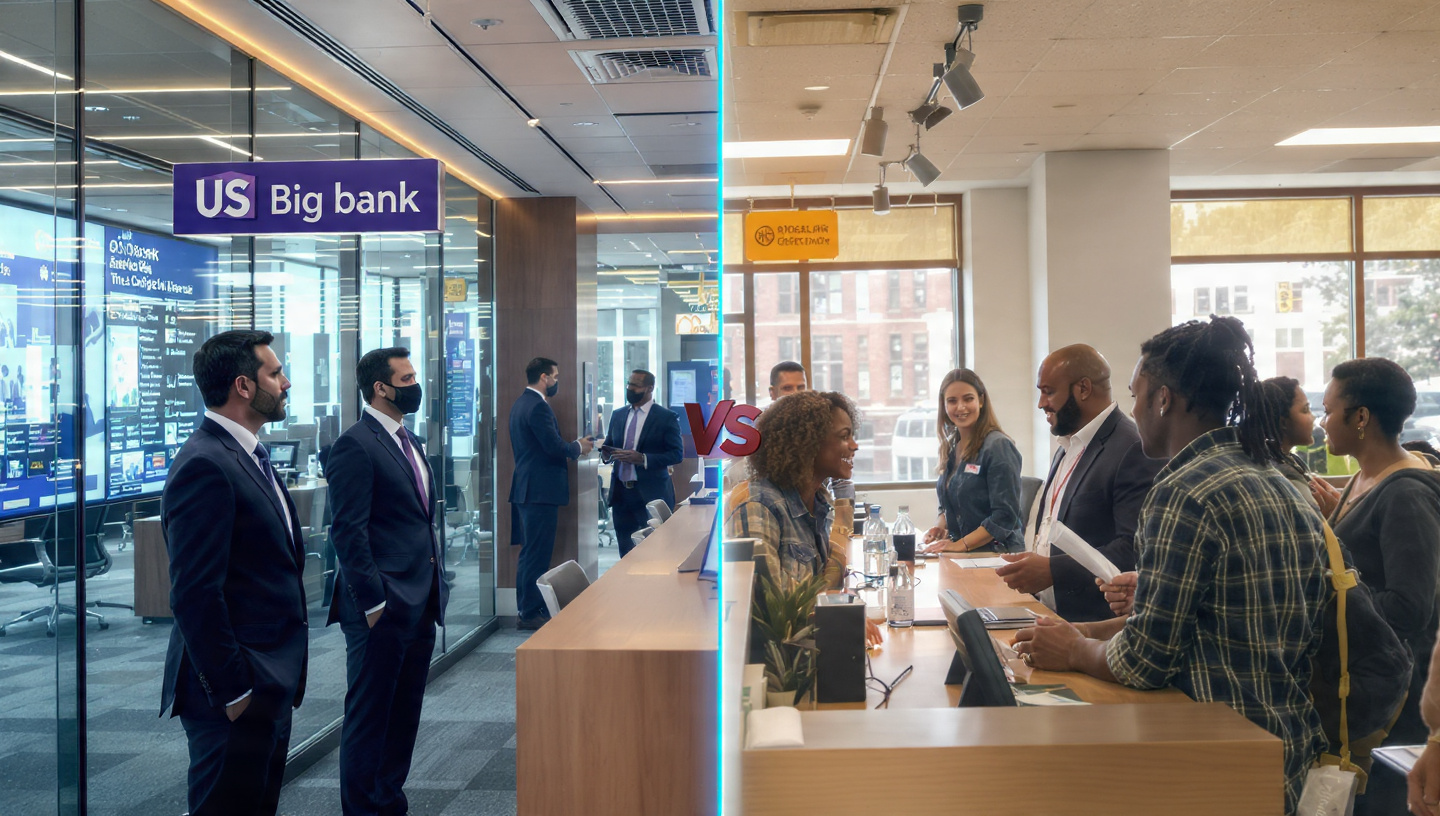
Bank Services in USA provide advice for new generation small business investment
New generation investors want low risk and high control. Bank Services in USA advisors recommend three steps.
First, separate personal and business money on day one. Open a free business checking with Bank Services in USA that offers sub-accounts for taxes and profit.
Second, use round-up savings. Every purchase rounds to the nearest dollar and funds your investment account automatically. Most Bank Services in USA now include this free.
Third, build credit early. Get a secured business card from your bank, use it for supplies, pay in full. Within six months, you qualify for larger lines. This is how Gen Z founders in Texas and California are scaling without venture capital.
Stay Connected with International News Gateway
Thank you for reading this guide on finding affordable auto insurance in the United States.
For daily news, insurance updates, personal finance articles, consumer guides, business developments, and technology news, visit International News Gateway regularly. Our editorial team is committed to publishing informative, original, and reader-focused content to help you stay informed.
If you found this article helpful, please share it with your friends, family, and colleagues on social media. Your support helps more readers discover reliable information and encourages us to continue producing high-quality content.
Stay connected with International News Gateway for the latest news, practical guides, and trusted updates from the United States and around the world.