

China’s Quantum Computer Jiuzhang Solves a 2.6 Billion-Year Task in Minutes: What the Breakthrough Really Means
Published: December 2023
China’s development of the Jiuzhang photonic quantum computer marked an important milestone in the global race to demonstrate quantum computational advantage. Researchers at the University of Science and Technology of China (USTC), led by physicist Pan Jianwei, reported that a specialized version of Jiuzhang could perform a particular sampling task dramatically faster than a classical supercomputer could reproduce through conventional computation.
The widely reported comparison—that a calculation taking a classical supercomputer billions of years could be completed by Jiuzhang in minutes—captures the scale of the experiment, but it needs important context. Jiuzhang was not a general-purpose computer solving everyday problems billions of years faster. The experiment focused on Gaussian boson sampling, a specialized computational benchmark designed to test the limits of classical simulation.
That distinction is essential for understanding what the achievement actually means. The result demonstrated that photonic quantum computing can achieve extraordinary performance on a carefully selected problem, while researchers continue working toward reliable, error-corrected quantum machines capable of solving practical problems in science, medicine, engineering and business.
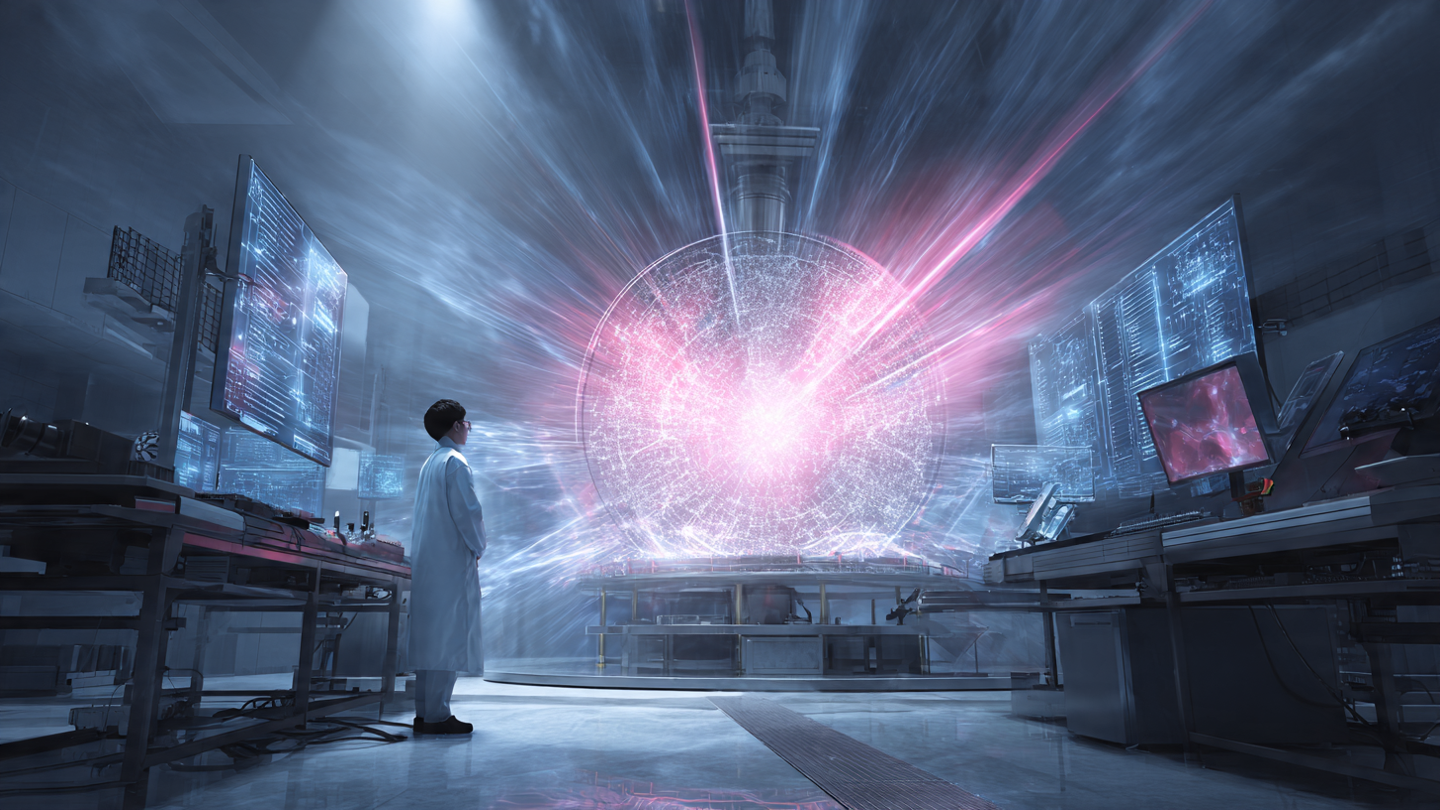
What Makes Jiuzhang Different From a Classical Computer?
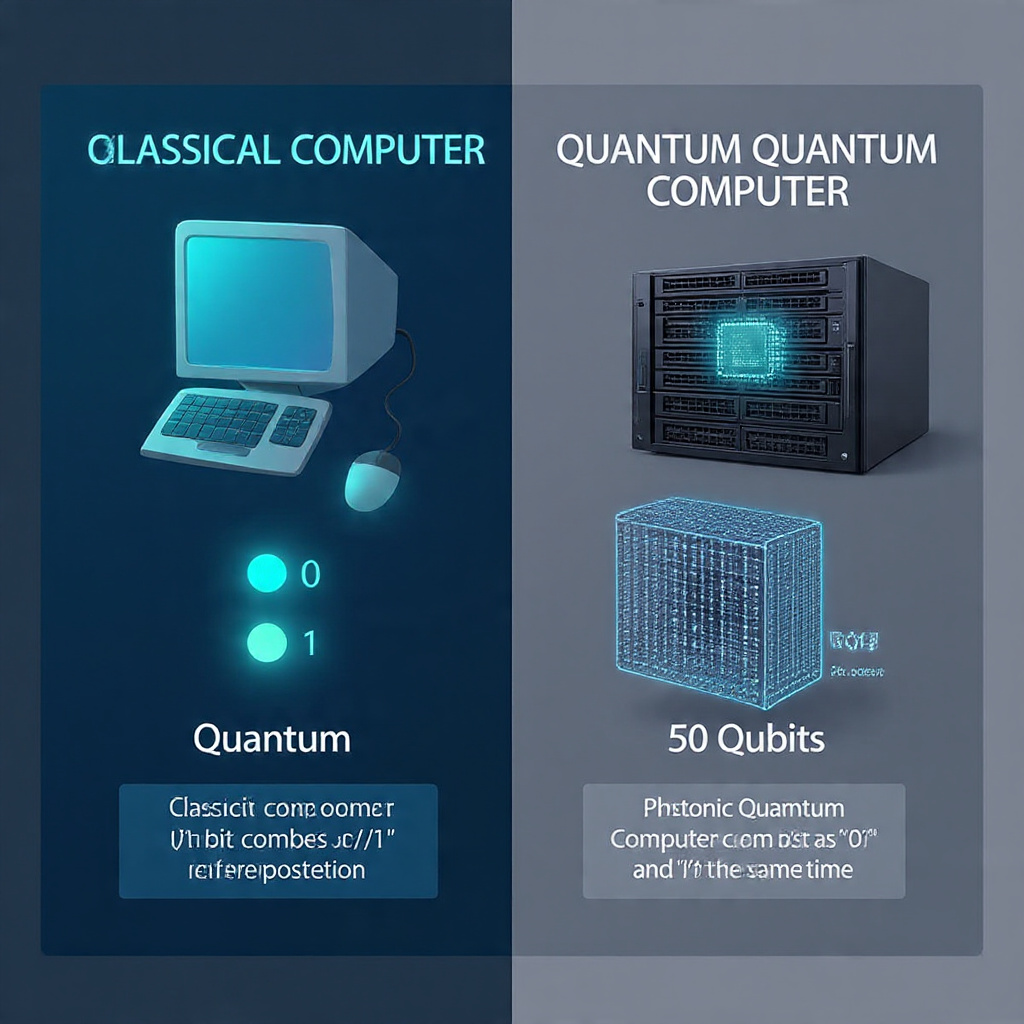
Traditional computers process information using bits, which represent either 0 or 1. Quantum computers use qubits, whose behavior is governed by quantum mechanics.
Qubits can exist in combinations of quantum states through superposition, while interactions between qubits can create entanglement. These properties allow quantum systems to process certain types of information in ways that are fundamentally different from conventional computers.
Jiuzhang takes another approach by using photons, or particles of light, as the physical carriers of quantum information. Rather than relying primarily on superconducting circuits, the system uses optical components, interferometers, and photon detectors to perform its calculations.
The experiment was designed around Gaussian boson sampling, in which the machine generates and measures patterns of photons passing through an optical network. Reproducing those results using conventional computing can become extremely difficult as the system grows.
The important lesson is therefore not that quantum computers have replaced supercomputers. Instead, Jiuzhang demonstrated how a quantum system can outperform classical computation on a narrowly defined task under experimental conditions.
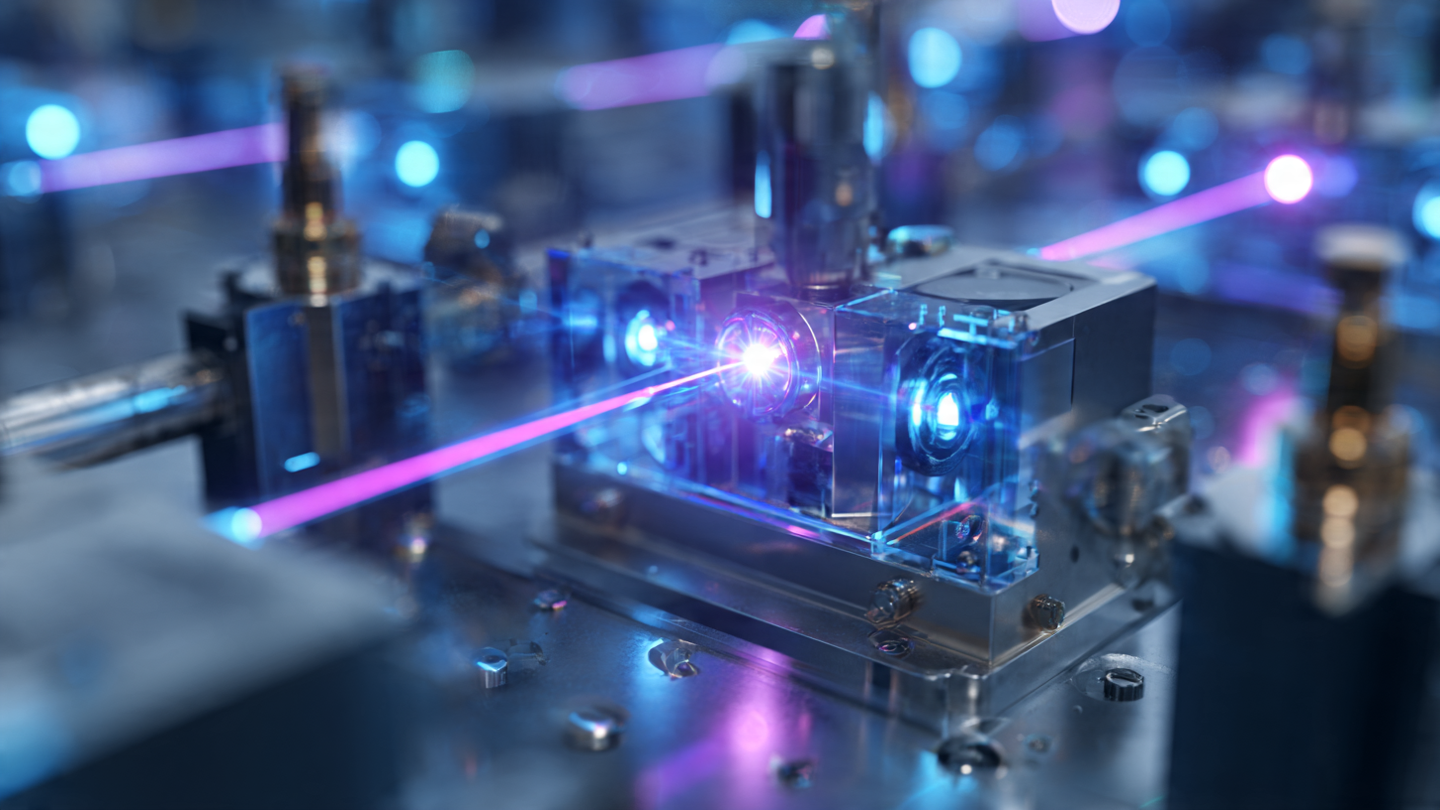
Why the “2.6 Billion Years” Comparison Needs Context
The enormous time comparison attracted worldwide attention because it provides an intuitive way to describe the computational challenge.
However, such comparisons depend on the specific algorithm, hardware assumptions, and classical simulation method being used. A statement that a quantum experiment takes minutes while a classical simulation would require billions of years should not be interpreted as meaning that the quantum machine is universally billions of years faster.
This is an important distinction for readers evaluating quantum technology claims.
Quantum advantage is currently demonstrated most clearly in specialized experiments. Turning that advantage into commercially useful applications requires additional progress in areas such as:
- Error correction
- Hardware reliability
- Larger numbers of useful qubits
- Quantum software
- Improved measurement systems
- Practical algorithms
- Integration with classical computers
The scientific achievement is significant precisely because it demonstrates that quantum hardware can operate in a computational regime that becomes extraordinarily difficult for conventional systems to reproduce.
How Photonic Quantum Computing Works
Jiuzhang belongs to a family of photonic quantum computing systems.
Photons are attractive for quantum information because they can travel through optical systems with relatively low interaction with their environment. Researchers can manipulate them using lasers, beam splitters, phase shifters, and other optical components.
In a simplified picture, photons enter an optical network and interact with the system’s components. Detectors then record the resulting output patterns.
The challenge is controlling these quantum states accurately. Photon loss, detector imperfections and other sources of experimental error can affect the results.
Photonic systems therefore have their own engineering challenges, just as superconducting and trapped-ion approaches have theirs. There is currently no single quantum-computing architecture that has definitively won the race to practical, large-scale quantum computing.
What Jiuzhang Does—and Does Not—Prove
The Jiuzhang experiments provide evidence that quantum systems can perform certain computational tasks beyond the practical reach of classical simulation.
But the experiment does not mean that a quantum computer can instantly run ordinary applications such as Microsoft Word, search the internet, edit videos, or train every artificial-intelligence model faster than a conventional computer.
Quantum computers are expected to be valuable for particular classes of problems.
Potential applications being researched include:
- Molecular and materials simulation
- Optimization
- Cryptography
- Chemistry
- Financial modeling
- Machine learning
- Logistics
- Scientific research
Most of these applications remain active areas of research. The transition from laboratory demonstrations to commercially useful quantum computing could take years, and some proposed applications may prove less advantageous than originally expected.
That scientific uncertainty is part of the story.
Could Quantum Computing Transform Drug Discovery?
One of the most frequently discussed applications is chemistry.
Molecules are governed by quantum mechanics, making them difficult to simulate accurately as their complexity increases. Conventional computers can approximate molecular behavior, but the computational cost can become substantial for complicated systems.
A sufficiently powerful, fault-tolerant quantum computer could potentially simulate certain molecular systems more naturally than classical machines.
This could eventually help researchers investigate:
- New medicines
- Catalysts
- Battery materials
- Fertilizers
- Industrial chemicals
- Advanced materials
However, Jiuzhang itself did not discover a new medicine or perform a pharmaceutical breakthrough. The connection is prospective: researchers are interested in whether future quantum machines can apply quantum algorithms to chemically relevant problems.
That distinction separates genuine scientific progress from exaggerated predictions.
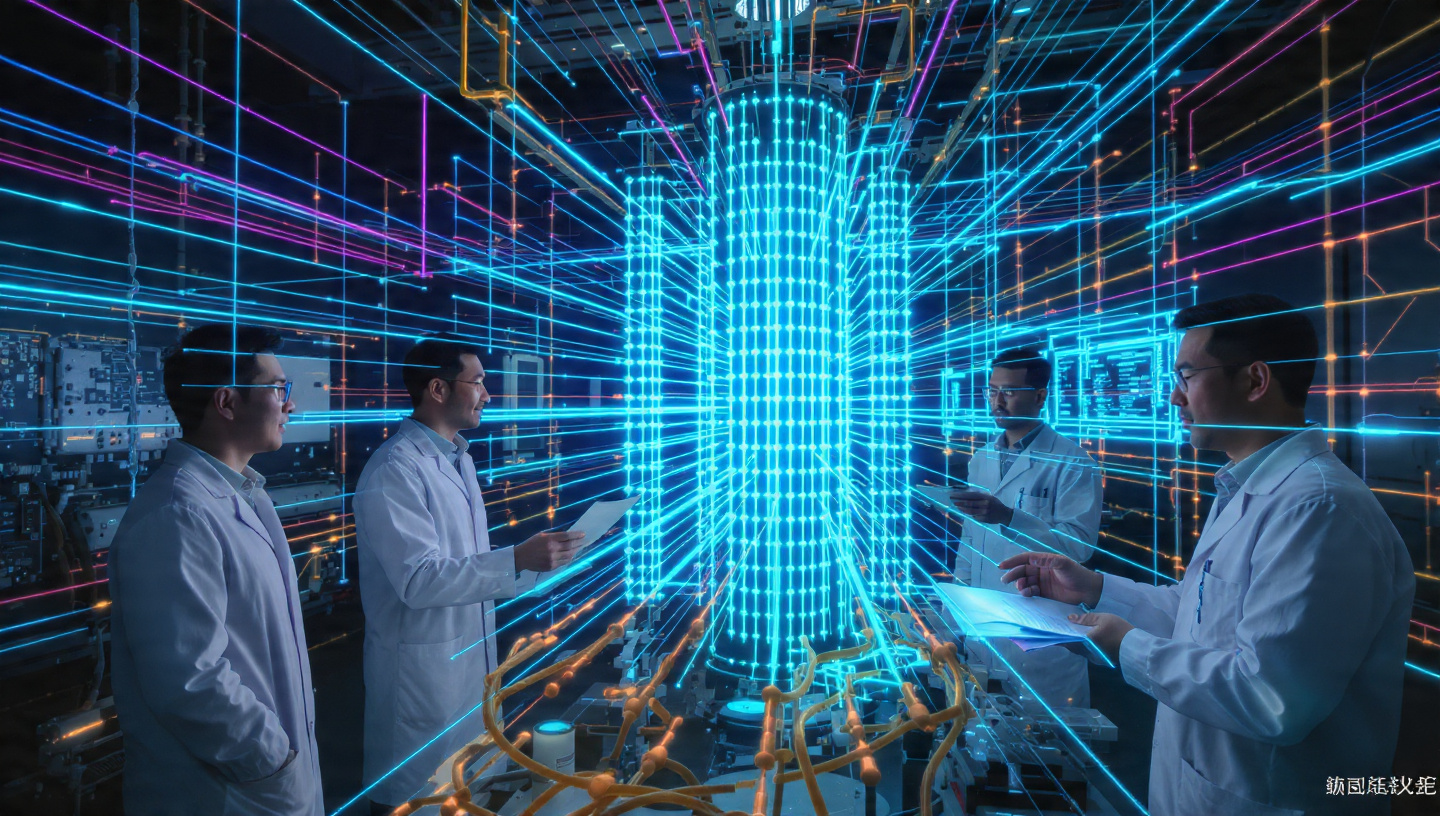
Quantum Computing and Climate Research
Climate and environmental science also involve extremely complicated calculations.
Scientists use powerful conventional computers to simulate atmospheric processes, oceans, weather patterns, energy systems and chemical reactions. Quantum computing could eventually contribute to some of these calculations, particularly where quantum algorithms offer advantages for specific mathematical or molecular problems.
Potential applications could include improved modeling of:
- Atmospheric chemistry
- Carbon-capture materials
- Battery technologies
- Solar-cell materials
- Complex fluid systems
But researchers should not interpret the Jiuzhang experiment as evidence that a quantum computer can currently forecast the Earth’s climate in seconds.
Practical quantum climate applications require hardware and algorithms that are considerably more advanced than today’s experimental systems.
The Connection Between Quantum Computing and Artificial Intelligence
Quantum computing is also being investigated as a potential tool for artificial intelligence and machine learning.
Researchers are exploring hybrid quantum-classical systems, where conventional processors handle much of the workload while quantum processors perform specific mathematical operations.
Possible areas of investigation include optimization, sampling, and certain machine-learning algorithms.
The field remains experimental, however. There is currently no general evidence that today’s quantum computers can replace large-scale GPU clusters for training modern artificial-intelligence systems.
In fact, quantum computing and AI may develop as complementary technologies. Classical AI can help researchers design and optimize quantum hardware, while future quantum processors could potentially accelerate selected computational tasks.
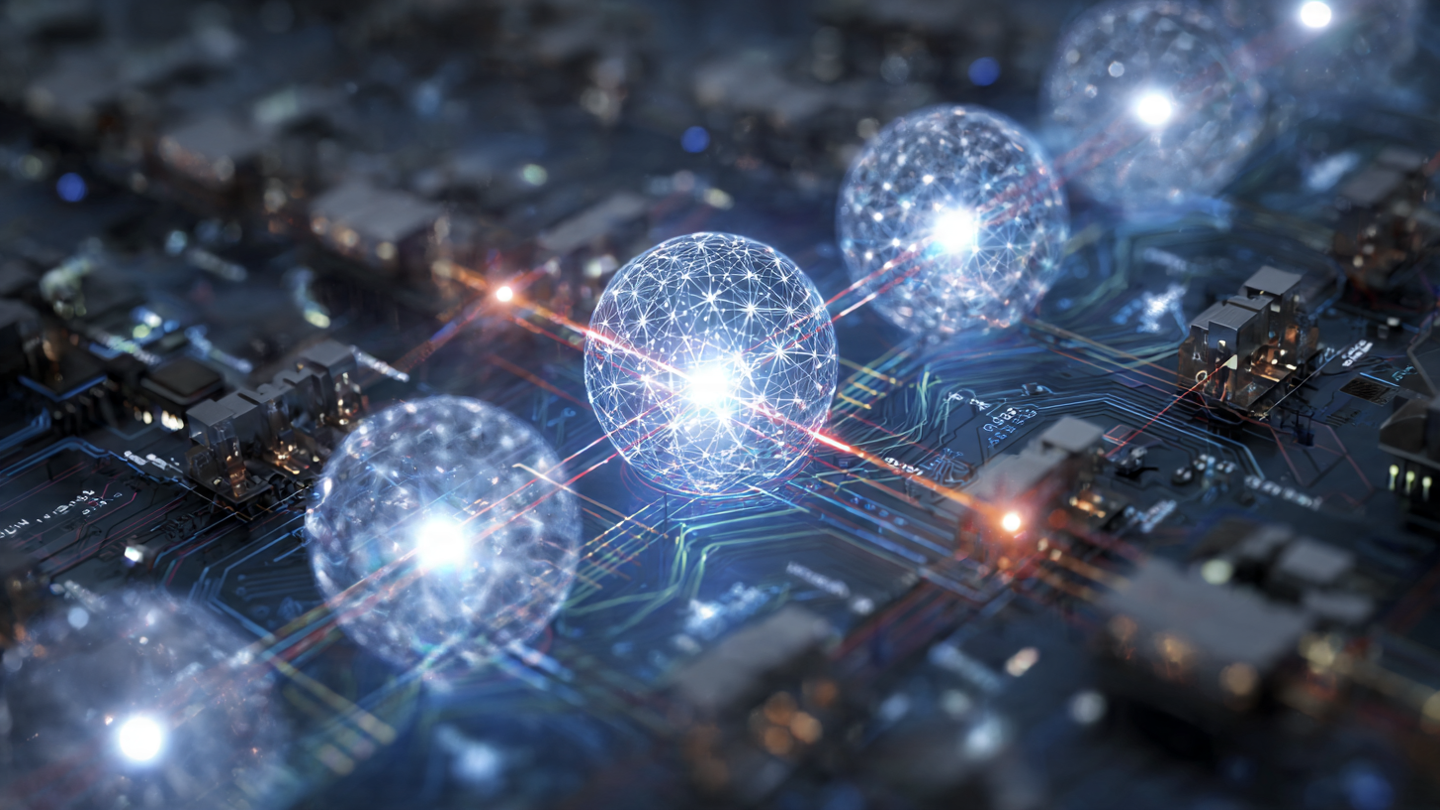
Possible areas of investigation include optimization, sampling, and certain machine-learning algorithms.
The field remains experimental, however. There is currently no general evidence that today’s quantum computers can replace large-scale GPU clusters for training modern artificial-intelligence systems.
In fact, quantum computing and AI may develop as complementary technologies. Classical AI can help researchers design and optimize quantum hardware, while future quantum processors could potentially accelerate selected computational tasks.
Quantum Computing Creates a Major Cybersecurity Challenge
One of the most important long-term implications of quantum computing involves cybersecurity.
Modern encryption systems protect banking, communications, government information and countless online services. Some public-key cryptographic systems rely on mathematical problems that are difficult for classical computers to solve.
A sufficiently capable fault-tolerant quantum computer running algorithms such as Shor’s algorithm could threaten some widely used public-key cryptographic schemes.
Jiuzhang does not possess this capability. Current experimental quantum computers remain far from the scale and reliability required to break widely deployed encryption systems.
Nevertheless, governments and technology companies are already preparing for the possibility.
This has accelerated interest in post-quantum cryptography, which uses mathematical approaches designed to remain secure against both conventional and future quantum computers.
For organizations, the practical lesson is not to panic about existing encryption but to begin understanding long-term migration requirements and follow established cybersecurity guidance.
China, the United States and the Global Quantum Race
Quantum computing has become a major international research field involving universities, governments and technology companies across several regions.
China has invested heavily in quantum research, while the United States and Europe have developed major programs of their own. Companies including IBM, Google, Microsoft and others are pursuing different hardware and software approaches.
The competition is not simply about building the machine with the largest number of qubits.
Researchers also care about:
- Qubit quality
- Error rates
- Coherence
- Connectivity
- Gate fidelity
- Error correction
- Useful computational output
- Scalability
A machine with more physical qubits is not automatically more capable than a smaller system with better performance and error correction.
That is why comparisons between quantum computers require careful attention to the specific benchmark being used.
From Quantum Advantage to Useful Quantum Computing
The next major challenge is moving beyond demonstrations.
Today’s quantum processors are often described as noisy intermediate-scale quantum (NISQ) systems. They can perform sophisticated experiments but remain vulnerable to errors.
Future machines will likely need substantial quantum error correction. Instead of relying on a single imperfect physical qubit, error-corrected systems use many physical qubits to create more reliable logical qubits.
This creates an enormous engineering challenge because the number of physical components required can be much larger than the number of logical qubits ultimately used for computation.
Consequently, the most important milestone for the industry may not be another headline-grabbing benchmark. It may be demonstrating that quantum systems can repeatedly solve a commercially or scientifically meaningful problem with a measurable advantage over the best classical alternatives.
What the Jiuzhang Breakthrough Means for the Future
The Jiuzhang experiments are important because they demonstrate that quantum computing is no longer purely theoretical.
At the same time, the technology remains in an early stage.
The most responsible way to view the achievement is as a proof of quantum computational capability, rather than evidence that general-purpose quantum computers have arrived.
The path ahead includes substantial scientific and engineering obstacles. Researchers must improve hardware stability, reduce errors, develop practical algorithms and determine which real-world problems genuinely benefit from quantum processing.
If those challenges are overcome, quantum computing could eventually become an important component of the global computing infrastructure, working alongside conventional CPUs, GPUs and specialized accelerators.
Why This Matters to Technology Readers
For businesses, universities and governments, the rise of quantum computing has several practical implications.
Organizations with long-lived sensitive data should follow developments in post-quantum cryptography. Technology companies should monitor quantum algorithms that could affect optimization, chemistry or machine learning. Universities will need researchers trained across physics, computer science, mathematics and engineering.
For countries developing their technology sectors, including emerging economies, education and research partnerships may be just as important as purchasing hardware.
Related Reading on International News Gateway: Might Nvidia Be the First Company With an AI CEO?
The quantum industry will require specialists who understand both the underlying science and its practical applications.
Final Takeaway
China’s Jiuzhang represents a major milestone in the development of photonic quantum computing. Its ability to perform a specialized sampling experiment dramatically faster than classical simulation demonstrated the growing capabilities of quantum hardware.
But the headline requires context: Jiuzhang is not a general-purpose computer that can complete every calculation billions of years faster. Its achievement applies to a specific computational problem designed to demonstrate quantum advantage.
The larger story is still significant. Quantum researchers around the world are working toward machines that can move beyond laboratory demonstrations and solve useful problems in chemistry, materials science, optimization and cybersecurity.
For International News Gateway (internationalnewz.com) readers, the most important takeaway is simple: the quantum era is developing, but its biggest practical breakthroughs will depend on turning impressive experimental demonstrations into reliable, scalable and useful technology.
Editorial note: This article is intended for general educational and informational purposes. Quantum-computing capabilities are evolving rapidly, and claims about future applications should be treated as research possibilities rather than guaranteed outcomes.





мотопомпа купить https://nasosy-msk.ru/ .
Выбор современных родителей – коляска-трость, с прочными колесами и удобной ручкой.
Стильная и практичная коляска-трость для вашего малыша, с многофункциональной корзиной для покупок.
Универсальная коляска-трость для города и природы, с вместительной корзиной и мягкими подушками.
Компактная коляска-трость для активных мам и пап, и мягкими ремнями безопасности.
abc design коляска трость https://kolyaski-trosti-progulochnye.ru/ .
Широкий выбор фурнитуры для плинтуса, выберите подходящий вам вариант.
Качественная фурнитура для плинтуса, долговечные и надежные в использовании.
Удобство монтажа фурнитуры для плинтуса, для быстрой установки.
Модные элементы для украшения плинтуса, сделайте дом уютным и стильным.
Природные решения для отделки плинтуса, экологичный выбор для вашего дома.
Модные цвета для элементов плинтуса, создайте гармонию в доме.
Уникальные элементы для стильного плинтуса, сделайте свой дом неповторимым.
Рекомендации по заботе о фурнитуре для плинтуса, для долгосрочного использования.
Декоративные элементы для фурнитуры плинтуса, создайте уютный и стильный дом.
Изысканные решения для отделки плинтуса, сделайте свой дом роскошным и элегантным.
фурнитура купить в москве [url=https://furnituradlyaplintusamsk.ru/]https://furnituradlyaplintusamsk.ru/[/url] .
Как не стать жертвой мошенников при покупке диплома о среднем полном образовании
Reliable HVAC Repair Services https://serviceorangecounty.com stay comfortable year-round with our professional HVAC repair services. Our experienced team is dedicated to diagnosing and resolving heating, cooling, and ventilation issues quickly and effectively.
Тактичные штаны: идеальный выбор для стильных мужчин, как сочетать их с другой одеждой.
Тактичные штаны: удобство и функциональность, которые подчеркнут ваш стиль и индивидуальность.
Тактичные штаны: секрет успешного образа, который подчеркнет вашу уверенность и статус.
Сочетание стиля и практичности в тактичных штанах, которые подчеркнут вашу спортивную натуру.
Тактичные штаны: какой фасон выбрать?, чтобы подчеркнуть свою уникальность и индивидуальность.
История появления тактичных штанов, которые подчеркнут ваш вкус и качество вашей одежды.
Сочетание стиля и практичности в тактичных штанах, которые подчеркнут ваш профессионализм и серьезность.
купити тактичні штани купити тактичні штани .
продамус промокод скидка продамус промокод скидка .
соут в офисе москва соут стоимость одного рабочего места москва
Mostbet o‘yinchilari uchun yuqori koeffitsiyentlar va tez to‘lovlar | Mostbet mobil ilovasi bilan istalgan joyda o‘yinlardan bahramand bo‘ling | Mostbet-da ro‘yxatdan o‘tish juda oson va tezkor | Mostbet onlayn kazino va sport turlari uchun eng yaxshi joy | Mostbet orqali yangi o‘yinlar va aksiyalardan foydalaning mostbet kazino
услуги по специальной оценке условий труда стоимость в москве условия проведения соут
по привлекательной стоимости
гибкий самоклеющийся напольный плинтус https://elastichnyj-plintus.ru/ .
вывод из запоя в стационаре http://www.wisdomtarot.tforums.org/viewtopic.php?f=16&t=11729 .
Идеальный букет невесты для вашей свадьбы, которые вас вдохновят.
Шаг за шагом: соберите уникальный букет невесты, который станет вашим сокровищем.
Лучшие тренды в букете невесты, и не оставит равнодушными гостей.
Как сэкономить на букете невесты без потери красоты, который порадует вас и вашего жениха.
Свежие цветы или нет: какой букет невесты лучше, для сохранения воспоминаний о свадьбе.
Чистые линии и нежные оттенки: секреты минималистического букета невесты, для современной невесты.
Стильные сочетания букета и платья невесты, для создания гармоничного образа.
букет невесты нижний новгород букет невесты нижний новгород .
Как не попасть впросак при покупке диплома колледжа или ПТУ в России
Почему Bugaboo – лучший выбор для малыша, Купить коляску Bugaboo – значит сделать правильный выбор, Bugaboo: доверие мам по всему миру, Комфорт и удобство с Bugaboo, 5 причин выбрать коляску Bugaboo для вашего малыша, Bugaboo Cameleon: легендарная коляска для малышей, Bugaboo Donkey: простор для ваших малышей, Bugaboo Buffalo: коляска для любых приключений.
коляска бугабу https://kolyaski-bugaboo-msk.ru/ .
Prodamus -промокод на подключение http://www.rubiz.forum.cool/viewtopic.php?id=3874# .
Узнайте стоимость диплома высшего и среднего образования и процесс получения
промокод на робокасса скидка подключение https://promokod-robokassa.ru/ .
промокод на подключение продамуса http://prodamus-promokod21.ru .
промокод prodamus скидка промокод prodamus скидка .
Платежный модуль Getcourse промокод https://www.platezhnyj-modul-getkurs-promokod.ru .
download instagram stories download instagram stories .
сколько стоит прокат сноуборда Красная Поляна прокат сноубордов Красная поляна
специальная оценка рабочих мест проведение соут стоимость в москве
срочный займ Займ 150 000 тенге
соут оказание услуг заявка на соут
Микрозайм Казахстан Sravnim.kz
вызов нарколога на дом екатеринбург вызов нарколога на дом екатеринбург .
вывести из запоя врачом наркологом на дому вывести из запоя врачом наркологом на дому .
вывод из запоя в челябинске https://vyvod-iz-zapoya-chelyabinsk11.ru/ .
real estate prices realty Montenegro
капельница на дому круглосуточно капельница на дому круглосуточно .
капельница на дому круглосуточно капельница на дому круглосуточно .
выведение из запоя в балашихе https://www.vyvod-iz-zapoya-v-stacionare-balashiha11.ru .
вывод из запоя москва на дому вывод из запоя москва на дому .
запой люберцы запой люберцы .