Published: May 2026
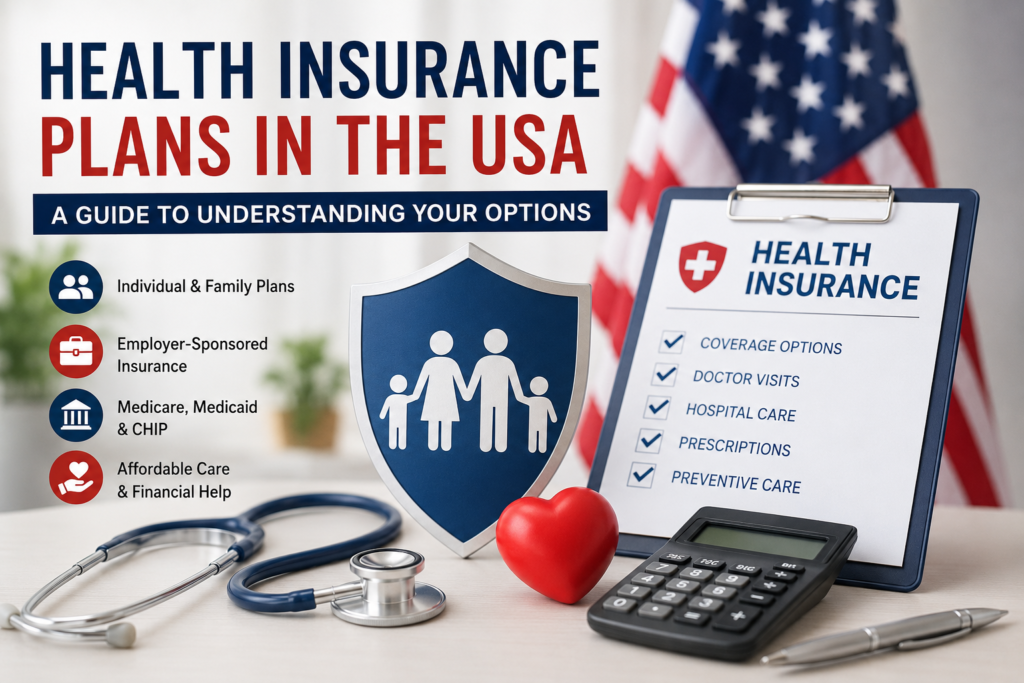
Choosing health insurance in the United States can be complicated. The right option can depend on your age, household income, employment, location, healthcare needs, family situation, and eligibility for public programs.
Unlike a one-size-fits-all system, the U.S. health insurance market includes employer-sponsored plans, Marketplace coverage, Medicaid, CHIP, Medicare, and other forms of coverage. Each option has different eligibility requirements, costs, networks, benefits, and enrollment rules.
This guide from International News Gateway explains the main types of health insurance plans in the USA, how costs work, what to compare before enrolling, and where consumers can find reliable information.
Important: This article is for general educational purposes and is not medical, insurance, tax, or financial advice. Health insurance rules and prices can vary by state and individual circumstances. Always review the official plan documents and government resources before making a coverage decision.
Understanding Health Insurance in the United States
Health insurance helps people manage the cost of medical care by covering some or all of the cost of eligible healthcare services according to the terms of a policy.
Depending on the plan, coverage may include doctor visits, hospital care, prescription medicines, preventive services, laboratory services, mental health treatment, maternity care, and other healthcare services.
However, having insurance does not necessarily mean every medical bill will be paid in full.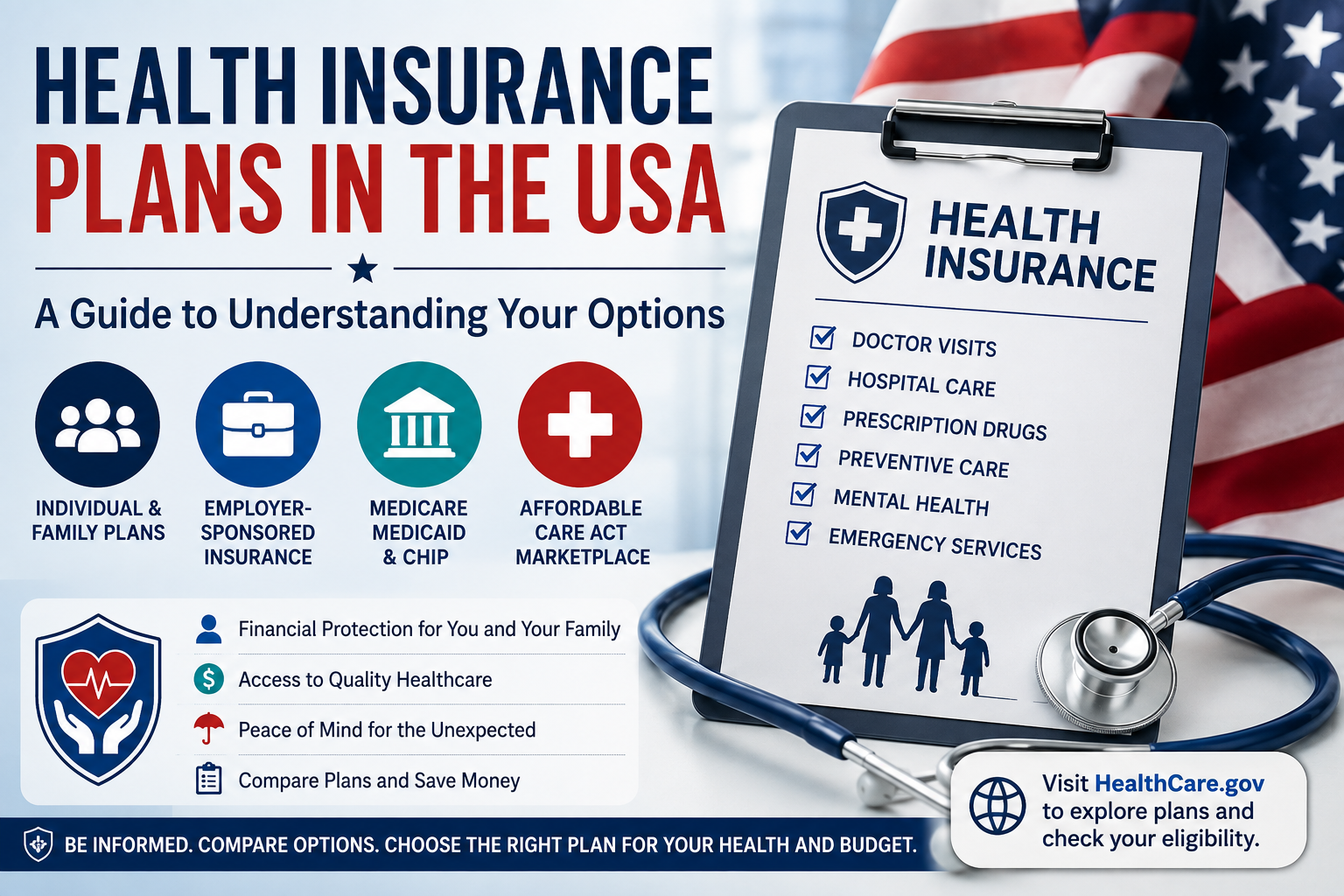
A policy can involve several different costs:
- Premium: The amount paid for insurance coverage, usually monthly.
- Deductible: The amount you may have to pay for covered services before the plan begins paying for many services.
- Copayment: A fixed amount paid for a covered service.
- Coinsurance: A percentage of the cost of a covered service that you pay after meeting applicable deductible requirements.
- Out-of-pocket maximum: A limit on certain covered costs you pay during a plan year, subject to the plan’s rules.
Understanding these terms is one of the most important steps when comparing health insurance plans.
Major Health Insurance Options in the USA
There is no single health insurance plan that is best for everyone. The main coverage pathways include employer-sponsored insurance, Marketplace plans, Medicaid, CHIP, Medicare, and certain other private coverage arrangements.
Employer-Sponsored Health Insurance
For many Americans, health insurance is provided through an employer.
Employers may pay part of the premium while employees contribute through payroll deductions. The exact contribution, deductible, provider network, prescription coverage, and other benefits depend on the employer’s plan.
Before choosing an employer plan, employees should examine:
- Monthly employee contributions
- Annual deductible
- Copayments and coinsurance
- Out-of-pocket maximum
- Doctor and hospital networks
- Prescription drug coverage
- Specialist access
- Family coverage costs
- Additional benefits
In 2026, HealthCare.gov states that an employer plan is generally considered affordable for Marketplace-savings purposes when the employee’s share of the lowest-cost self-only plan is less than 9.96% of household income, subject to applicable rules. An affordable employer plan that meets minimum standards can affect eligibility for Marketplace premium tax credits.
Because the rules can be complicated, employees should compare the actual employer offer with Marketplace options before declining workplace coverage.
ACA Marketplace Health Insurance Plans
The Affordable Care Act created Health Insurance Marketplaces where eligible consumers can compare and enroll in private health plans.
For most states, the federal Marketplace is operated through HealthCare.gov, while some states operate their own Marketplace platforms.
Marketplace applicants can find out whether they qualify for financial assistance, including premium tax credits, based on information such as household income and circumstances.
Marketplace plans also provide important consumer protections. HealthCare.gov states that Marketplace plans cover 10 essential health benefits, including emergency services, hospitalization, prescription drugs, mental health and substance-use treatment, maternity care, laboratory services, preventive care, and pediatric services.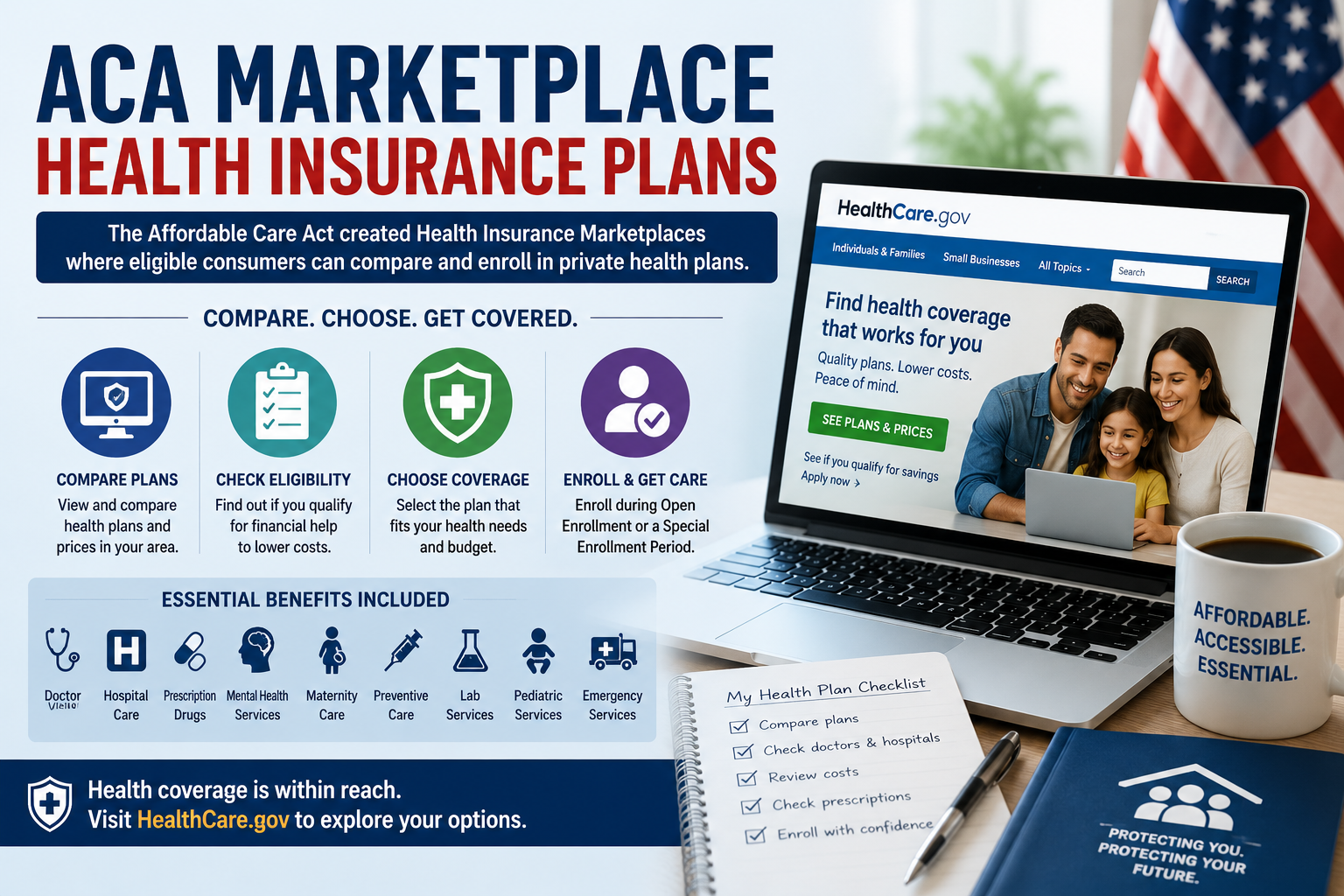
Who Can Use the Marketplace?
Generally, Marketplace eligibility requires that an applicant live in the United States, be a U.S. citizen or national or a lawfully present noncitizen, and not be incarcerated. People enrolled in Medicare generally cannot enroll in a Marketplace health or dental plan.
Eligibility can be different for specific circumstances, so consumers should verify their situation through the official Marketplace.
Understanding Marketplace Metal Levels
Marketplace health plans are commonly organized into metal categories:
- Bronze
- Silver
- Gold
- Platinum
These categories generally describe how the plan and consumer divide the cost of covered healthcare. They do not indicate the quality of medical care or the quality of doctors.
A plan with a lower premium can have higher deductibles or other out-of-pocket expenses, while a plan with a higher premium may provide a different cost-sharing structure.
Therefore, comparing only the monthly premium can give an incomplete picture.
A better comparison considers the potential annual cost of premiums plus deductibles, copayments, coinsurance, and other eligible expenses.
Medicaid and CHIP
Medicaid provides health coverage for certain eligible low-income individuals and families. Eligibility and benefits vary by state.
The Children’s Health Insurance Program, commonly called CHIP, provides coverage for eligible children in families who may earn too much to qualify for Medicaid but still meet program requirements.
HealthCare.gov states that people can apply for Medicaid and CHIP throughout the year rather than waiting for the annual Marketplace Open Enrollment period.
Because Medicaid rules differ by state, applicants should check with their state Medicaid agency or the official Marketplace for current eligibility information.
Medicare and Health Insurance for Older Adults
Medicare is a federal health insurance program primarily serving people age 65 and older, along with certain younger people who qualify because of disability or specific medical conditions.
Medicare is different from Marketplace insurance.
If someone has Medicare, they generally cannot use the Marketplace to purchase health or dental coverage.
Medicare has several parts and coverage arrangements, so people approaching Medicare eligibility should review official information carefully rather than assuming that a Marketplace plan will provide the same type of coverage.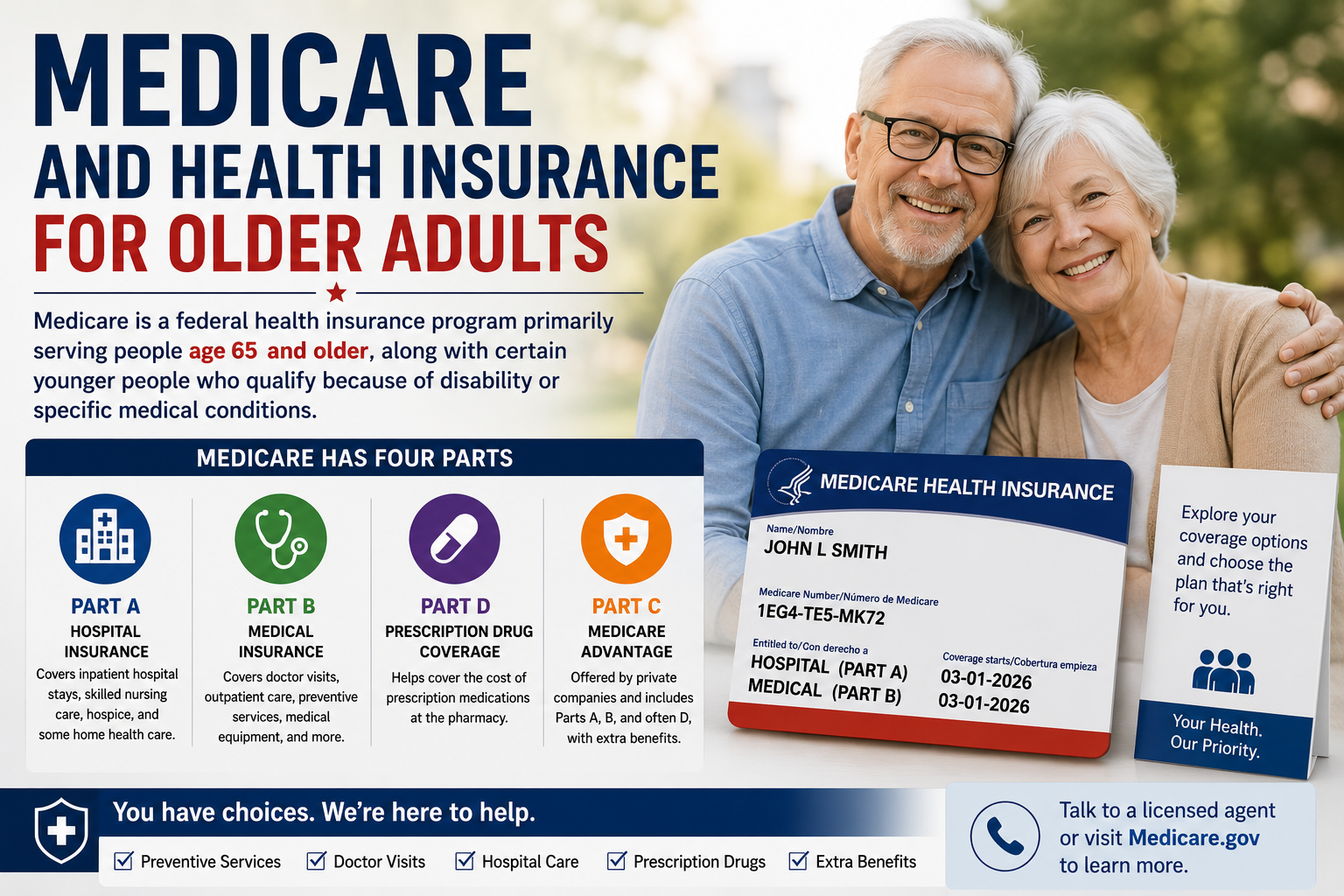
How Much Does Health Insurance Cost?
There is no universal health insurance price in the United States.
The amount a person pays can depend on:
- Age
- Location
- Household income
- Household size
- Employer contribution
- Plan type
- Deductible
- Provider network
- Prescription coverage
- Eligibility for financial assistance
- Level of coverage selected
Marketplace applicants can preview 2026 plans and estimated prices before completing an application. Final prices and eligibility for savings are determined through the Marketplace application process.
This makes it difficult—and potentially misleading—to claim that one national average represents what every American will pay.
Related Reading on International News Gateway: Best Life Insurance Companies in the USA for Families and Seniors [2026 Guide]
Premiums Are Only One Part of the Cost
A common mistake is choosing a health plan based solely on its monthly premium.
For example, Plan A may have a lower monthly premium but a substantially higher deductible. Plan B may cost more each month but have lower costs when medical services are used.
The better choice depends on the person’s circumstances.
Consumers should estimate both:
Expected annual premium costs + likely healthcare expenses
and consider the plan’s maximum potential covered out-of-pocket exposure.
People who rarely use healthcare may value lower monthly costs, while someone expecting regular treatment may place greater importance on deductibles, specialist costs, prescription coverage, and the provider network.
There is no universal answer.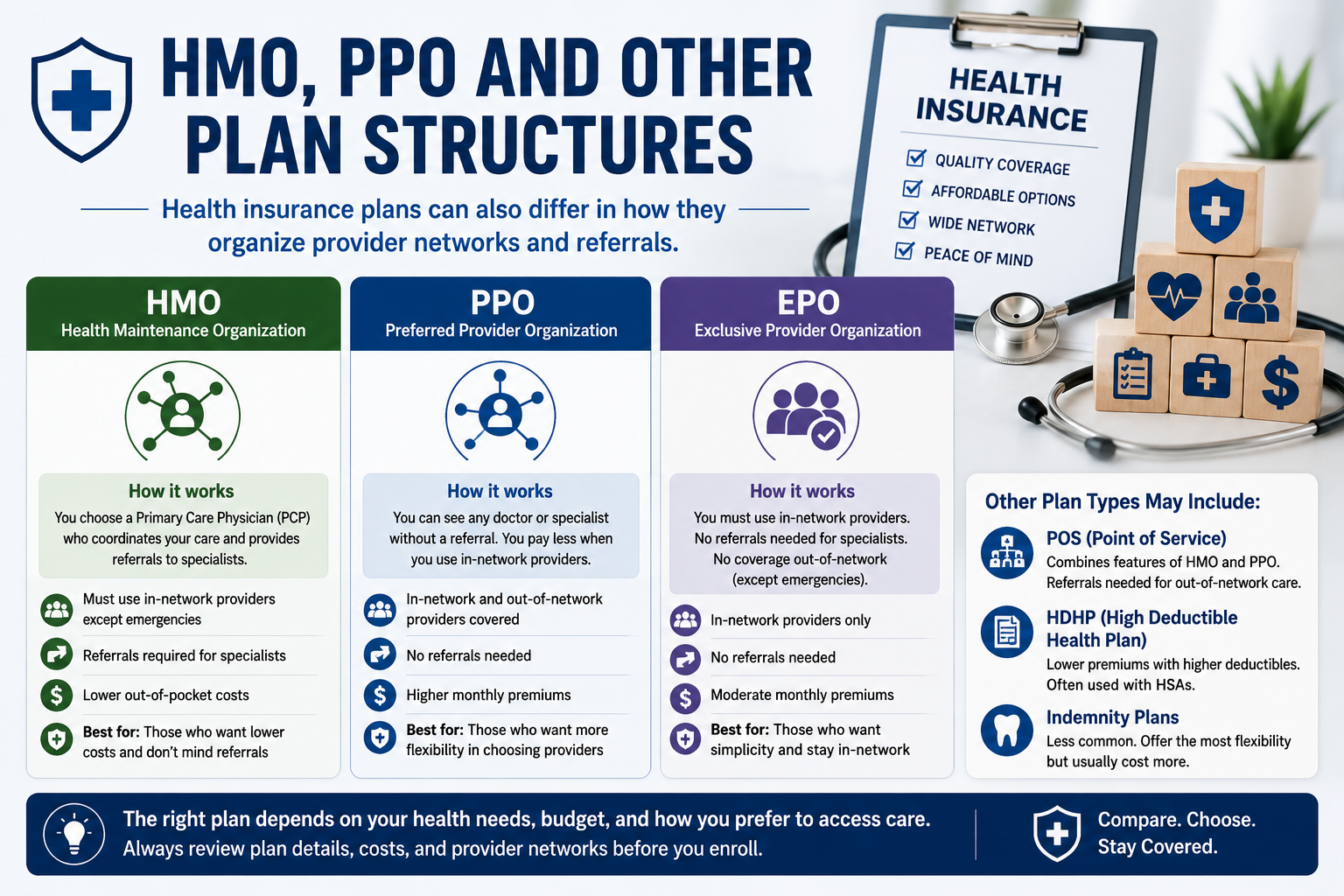
Check the Doctor and Hospital Network
A health insurance plan can become significantly less useful if your preferred doctor or hospital is outside its network.
Before enrolling, check whether:
- Your primary-care doctor participates
- Your specialists are included
- Your preferred hospital is in network
- Nearby urgent-care facilities participate
- Important pharmacies are covered
- Your prescriptions are included in the plan’s formulary
Network rules vary by plan. Some plans provide greater flexibility in choosing providers, while others place stronger emphasis on using in-network providers.
Always verify network participation directly with the insurer because provider networks can change.
Prescription Drug Coverage Matters
Prescription costs can represent a major part of healthcare spending for people who regularly take medication.
When comparing plans, look beyond whether a prescription is technically covered.
Check:
- The plan’s drug formulary
- Tier placement
- Copayments
- Coinsurance
- Deductible rules
- Pharmacy network
- Mail-order options
- Prior authorization requirements
If you take an expensive or specialized medication, it can be particularly important to confirm the plan’s coverage rules before enrollment.
Preventive Care and Essential Benefits
Marketplace plans cover essential health benefits under applicable federal rules.
These include outpatient care, emergency services, hospitalization, maternity and newborn care, mental health and substance-use services, prescription drugs, rehabilitation, laboratory services, preventive care, and pediatric services.
Some preventive services may be available without cost-sharing when provided under applicable requirements and by an in-network provider.
However, consumers should verify the details of their specific plan because coverage rules, provider networks, and circumstances can affect what they pay.
HMO, PPO and Other Plan Structures
Health insurance plans can also differ in how they organize provider networks and referrals.
HMO Plans
Health Maintenance Organization plans generally emphasize using a defined network of providers. Depending on the plan, members may need a primary-care provider to coordinate certain specialist care.
PPO Plans
Preferred Provider Organization plans generally offer more flexibility in choosing providers and may provide some coverage for out-of-network services, although at a higher cost.
EPO Plans
Exclusive Provider Organization plans generally cover services from providers in the plan’s network, except for emergencies and other specified circumstances.
These are broad descriptions. Specific rules differ among insurance plans, so consumers should read the plan’s official documents rather than relying solely on the plan type.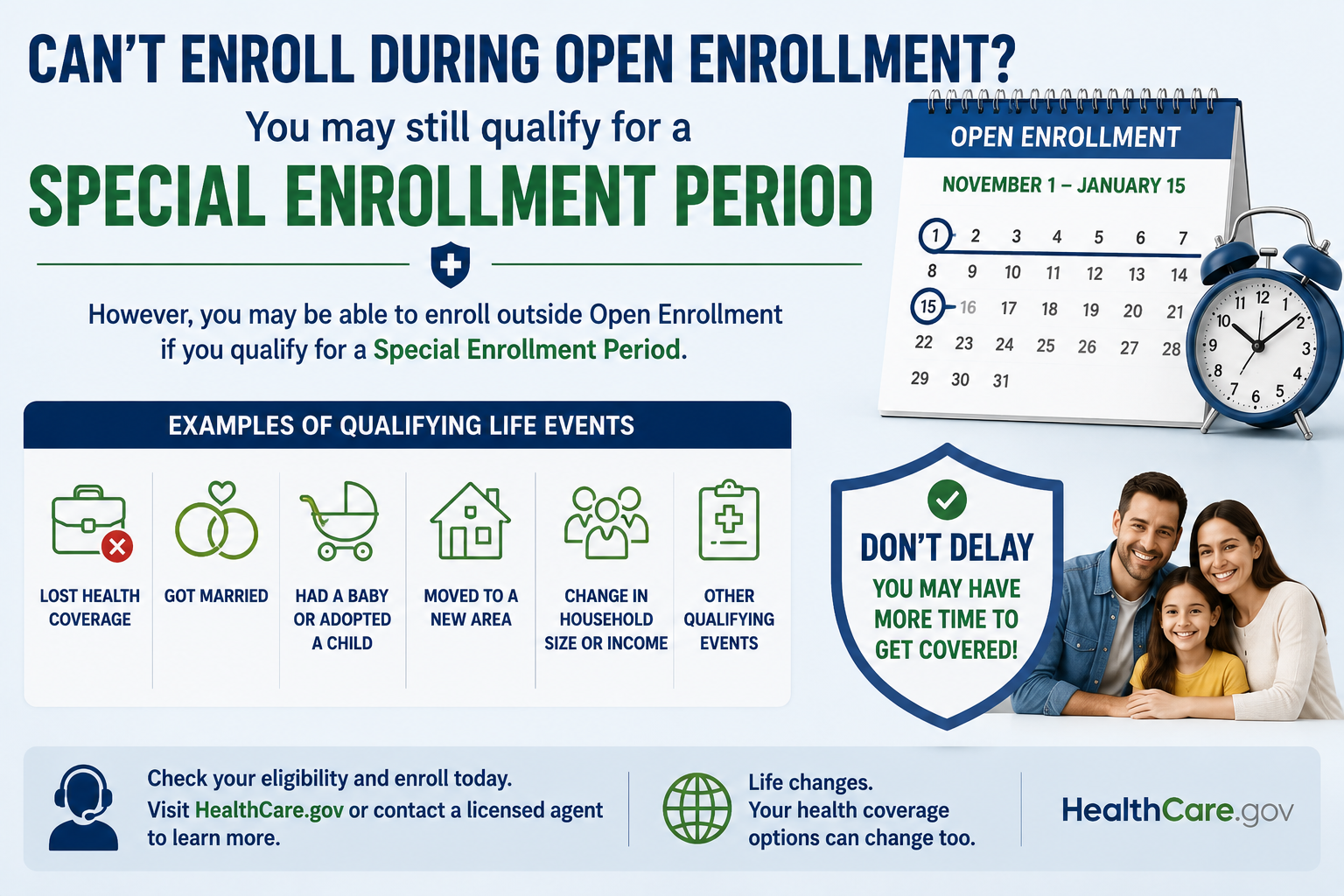
When Can You Enroll in Health Insurance?
For Marketplace coverage, HealthCare.gov currently identifies November 1 through January 15 as the annual Open Enrollment period. Coverage timing depends on when enrollment occurs.
However, people may be able to enroll outside Open Enrollment if they qualify for a Special Enrollment Period.
Qualifying events can include circumstances such as:
- Losing qualifying health coverage
- Getting married
- Having a baby
- Adopting a child
- Moving and meeting applicable requirements
- Certain changes in household circumstances
Medicaid and CHIP applications can generally be submitted throughout the year.
Enrollment rules can change, so readers should verify current deadlines before relying on information from an older article.
What Documents May Be Needed?
Preparing information in advance can make the enrollment process easier.
Depending on the situation, applicants may need information about:
- Household members
- Household income
- Current health coverage
- Employer-sponsored insurance offers
- Immigration or citizenship status
- Tax information
- Address and state of residence
HealthCare.gov provides application assistance online, by phone, through local assistance organizations, and through certified enrollment partners.
Consumers should be cautious when sharing sensitive personal or financial information and should verify that they are using an official or authorized enrollment service.
How to Compare Health Insurance Plans
A practical comparison can follow these steps.
1. Identify Your Coverage Options
Determine whether you have access to employer coverage, Marketplace coverage, Medicaid, CHIP, Medicare, or another legitimate coverage source.
2. Estimate Your Total Costs
Don’t look only at the premium. Consider deductibles, copayments, coinsurance, prescriptions, and the applicable out-of-pocket maximum.
3. Check Your Healthcare Providers
Make sure your preferred doctors, specialists, hospitals, and pharmacies participate in the plan.
4. Review Prescription Coverage
Confirm that important medications are covered and understand their cost-sharing requirements.
5. Compare Benefits
Look at preventive care, mental health services, maternity coverage, rehabilitation, emergency care, and other services relevant to your household.
6. Review the Official Documents
Read the plan’s Summary of Benefits and Coverage and other official materials before enrolling.
7. Check Financial Assistance
If you’re considering Marketplace coverage, complete the official application to determine whether you qualify for savings. HealthCare.gov explains that applicants can receive eligibility results after submitting their application.
Common Health Insurance Mistakes to Avoid
Choosing the Cheapest Premium Without Checking the Deductible
A low premium does not automatically mean a lower overall cost.
Ignoring the Provider Network
A plan that excludes your preferred healthcare providers may create unexpected expenses or inconvenience.
Assuming Every Prescription Is Covered the Same Way
Drug coverage can vary significantly among plans.
Missing Enrollment Deadlines
Missing Open Enrollment does not necessarily mean you have no options, but Special Enrollment rules apply outside the normal period.
Failing to Report Changes
Changes in income, household size, address, or other circumstances can affect Marketplace eligibility and financial assistance. HealthCare.gov advises consumers to update their Marketplace application when relevant changes occur.
Buying From an Unverified Source
Consumers should be careful with websites or advertisements promising unusually cheap coverage, guaranteed acceptance, or benefits that sound too good to be true.
Verify the insurer, plan details, exclusions, costs, and enrollment source before providing personal information or making a payment.
Related Reading on International News Gateway: Cheap Auto Insurance USA: A Complete Guide to Finding Affordable Coverage in 2026
Health Insurance for Families
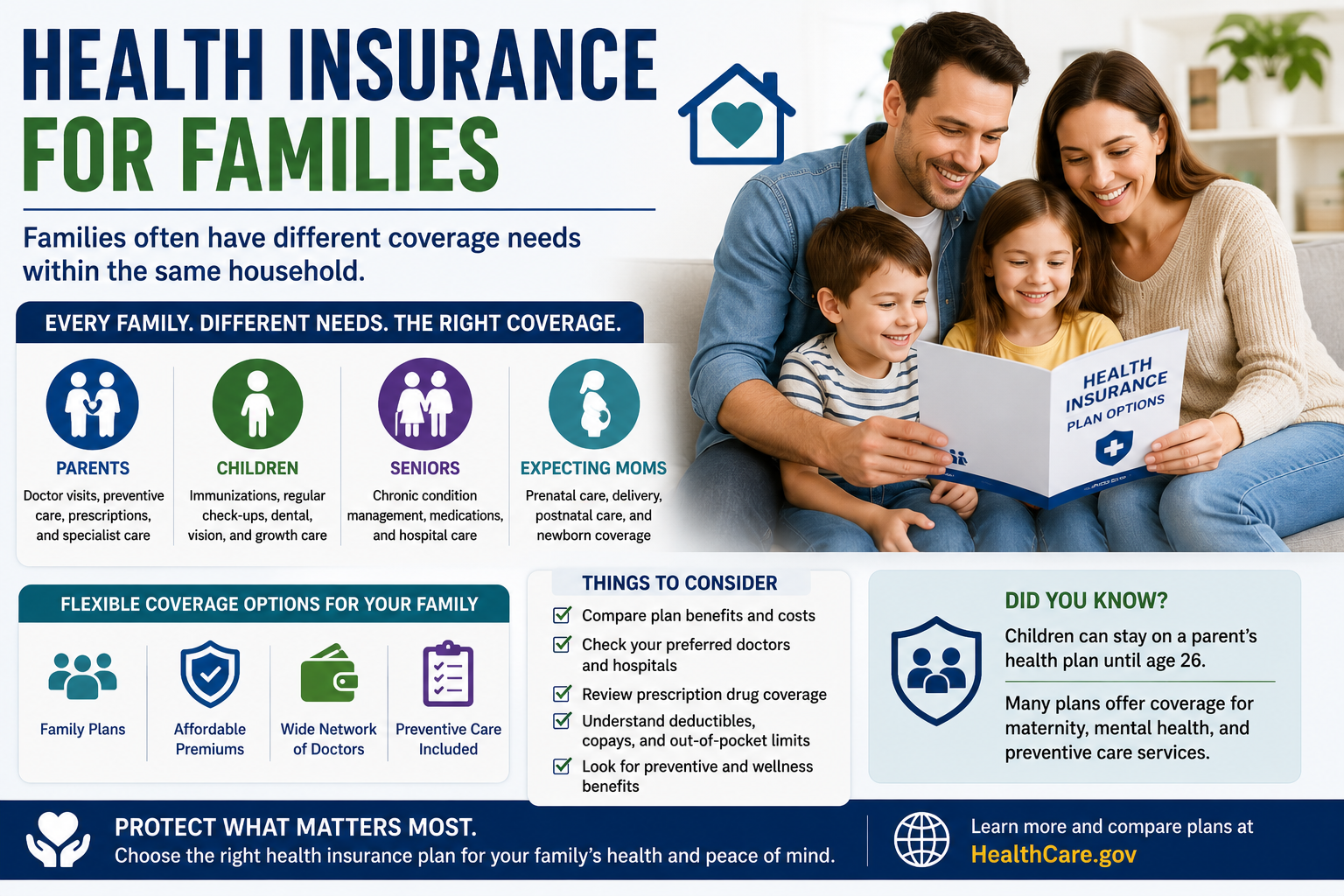
Families often have different coverage needs within the same household.
For example, parents may have employer-sponsored coverage while children qualify for CHIP or another program. In other situations, family members may use Marketplace coverage together.
HealthCare.gov notes that households can have different coverage arrangements depending on eligibility and circumstances.
Parents should consider pediatric providers, prescription needs, preventive care, emergency services, and expected healthcare use when comparing plans.
Health Insurance for Self-Employed Workers
People who do not receive insurance through an employer may need to explore individual-market coverage.
The Marketplace can be an important source of coverage for eligible individuals and families. Financial assistance may be available depending on household circumstances.
Self-employed consumers should be particularly careful when estimating annual income because changes in income can affect eligibility for Marketplace savings.
Because tax and insurance rules can interact, people with complicated financial circumstances may benefit from speaking with a qualified tax or insurance professional.
Health Insurance for New Residents and Immigrants
Eligibility for U.S. health insurance depends on the specific program and the individual’s circumstances.
Marketplace eligibility generally requires lawful presence for noncitizens, along with other requirements.
New residents should not assume that their eligibility is determined solely by citizenship. The official Marketplace and state agencies can provide information based on the person’s specific immigration and household circumstances.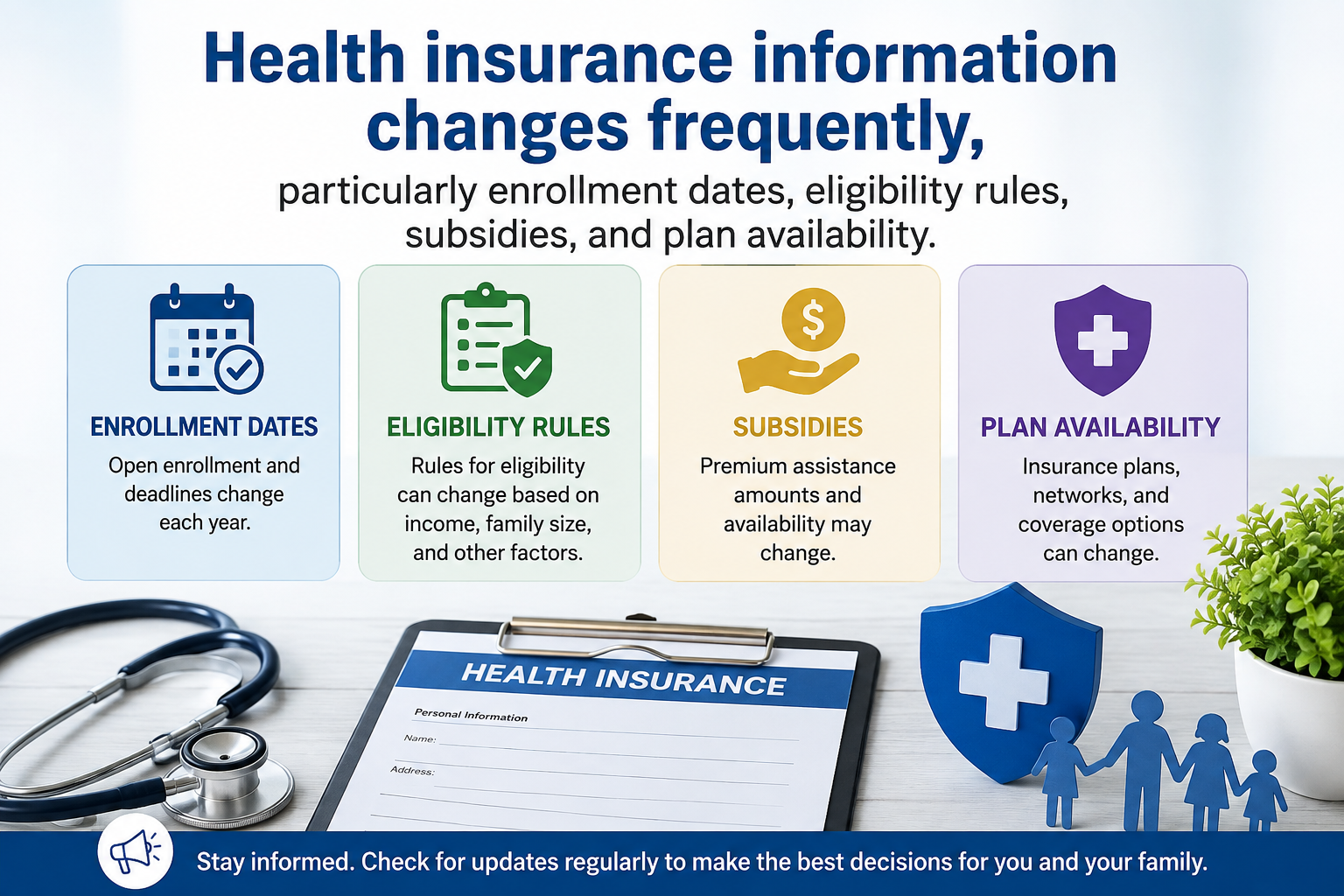
How to Find Reliable Health Insurance Information
Health insurance information changes frequently, particularly enrollment dates, eligibility rules, subsidies, and plan availability.
For that reason, readers should prioritize authoritative sources.
The federal Marketplace provides current information about plans, eligibility, enrollment, savings, and coverage.
Consumers should also consult:
- Their employer’s benefits department
- Their insurance company’s official documents
- Their state insurance department
- Their state Medicaid agency
- Medicare’s official resources
- Licensed insurance professionals when appropriate
Independent websites can help explain complicated subjects, but they should not replace official plan documents.
Final Thoughts
Health insurance plans in the USA can be complicated, but understanding the basic structure makes comparison easier.
The most important lesson is to look beyond the monthly premium. A meaningful comparison considers the total cost of coverage, deductible, copayments, coinsurance, provider network, prescription benefits, coverage rules, and eligibility for financial assistance.
For 2026, HealthCare.gov provides tools for viewing available Marketplace plans and estimated prices, while Medicaid, CHIP, Medicare, and employer-sponsored insurance provide additional pathways depending on individual circumstances.
There is no universally “best” health insurance plan. The appropriate choice depends on your healthcare needs, budget, location, household circumstances, and eligibility.
International News Gateway editorial standard: Because health insurance is a regulated and frequently changing subject, readers should confirm current eligibility, prices, enrollment dates, provider networks, and coverage terms through official sources before making a healthcare or financial decision.
Disclaimer: This article is educational content and is not a recommendation to purchase, cancel, or change any health insurance policy. Insurance availability, costs, benefits, eligibility requirements, and enrollment rules can vary by state and individual circumstances.