How Much Does Life Insurance Cost in the USA? Complete 2026 Guide
Published: July 2026
Website: InternationalNewz.com
Life insurance can provide financial protection for people who depend on you, but one of the first questions many consumers ask is simple: How much does life insurance cost in the USA?
There is no single price that applies to everyone. Life insurance premiums depend on factors such as your age, health, tobacco use, policy type, coverage amount, policy term, and the insurer’s underwriting guidelines.
For many healthy younger adults, term life insurance can cost considerably less than they expect. A 2025 LIMRA and Life Happens study found that younger adults substantially overestimated the cost of a $250,000, 20-year level-term policy. In one published example, the actual annual cost for a healthy 30-year-old male was roughly $167, although individual quotes can differ significantly.
This guide explains how life insurance pricing works, what affects your premium, how term and permanent insurance differ, and how to compare policies without focusing only on the cheapest monthly payment.
Important: Life insurance prices are highly individual. Examples in this article are educational illustrations, not guaranteed quotes or offers of insurance.
How Much Does Life Insurance Cost?
The cost of life insurance can range from relatively modest monthly premiums for some healthy applicants seeking term coverage to substantially higher premiums for permanent policies or applicants with greater underwriting risk.
A useful way to understand the market is to separate term life insurance from permanent life insurance.
| Policy type | Typical cost pattern | Main purpose |
|---|---|---|
| Term life insurance | Usually lower initial premiums | Temporary financial protection |
| Whole life insurance | Generally higher premiums | Lifetime coverage with cash-value features |
| Universal life insurance | Varies according to policy design | Permanent coverage with flexible features |
| Final expense insurance | Often designed for smaller death benefits | Funeral and final-expense needs |
The National Association of Insurance Commissioners (NAIC) explains that term insurance generally has lower premiums in the early years, while permanent insurance typically costs more because it can provide lifetime coverage and may include cash-value features.
What Is a Realistic Example of Life Insurance Cost?
Consider a healthy 30-year-old purchasing a $250,000, 20-year level-term life insurance policy.
LIMRA’s 2025 research found that consumers dramatically overestimated the cost of this type of policy. For healthy younger adults, the study’s estimated actual-cost range was far below the amounts many respondents guessed. A separate publication citing the same LIMRA research reported an actual cost of roughly $167 per year, or about $14 per month, for the healthy 30-year-old male example.
That should not be interpreted as a standard 2026 price for every 30-year-old. Your actual premium could be higher or lower depending on your health classification, tobacco use, sex, state, coverage amount, insurer, underwriting process, and policy term.
The important lesson is that consumers should obtain personalized quotes rather than assuming life insurance is automatically expensive.
Why Life Insurance Prices Are Different for Everyone
Life insurance is generally priced according to the insurer’s assessment of risk and the amount and type of coverage being purchased. NAIC describes insurance pricing as risk-based pricing, meaning factors such as age can affect the cost of life insurance.
1. Age
Age is one of the major factors affecting life insurance premiums.
Generally, younger applicants have a lower mortality risk than older applicants, so they may qualify for lower premiums when other factors are similar.
This is one reason people who know they need coverage often compare policies earlier rather than waiting many years.
2. Health
Your health history can have a significant effect on underwriting.
Depending on the insurer and policy, the application may consider factors such as:
- Current health conditions
- Medical history
- Prescription medications
- Height and weight
- Blood pressure
- Family medical history
- Previous surgeries or treatments
- Tobacco or nicotine use
- Other health-related information
Different insurers may evaluate the same applicant differently, so comparing multiple financially sound insurers can be useful.
3. Tobacco and Nicotine Use
Tobacco use can result in substantially higher premiums because insurers generally consider it an important underwriting risk factor.
Applicants should answer questions about tobacco and nicotine use honestly. Providing inaccurate information on an application can create serious problems later, including potential effects on policy benefits. NAIC specifically advises consumers to complete applications honestly and carefully.
4. Coverage Amount
A $100,000 policy will generally cost less than a $1 million policy for the same applicant and policy design.
However, buying too little coverage simply to obtain a lower premium can leave a family without enough financial support.
The right amount depends on your financial responsibilities rather than an arbitrary number.
5. Policy Length
Term life insurance can be purchased for different periods, commonly including 10, 20, or 30 years.
A longer term generally means paying for protection over a longer period and may result in a higher premium than a shorter term for otherwise comparable coverage.
NAIC notes that term policies can cover a specified period and may be suitable when coverage is needed for a particular financial obligation or period of life.
6. Type of Life Insurance
The type of policy has a major impact on cost.
Term life insurance generally focuses on death-benefit protection for a defined period and usually does not build cash value.
Permanent life insurance, including whole life and universal life, is designed to provide longer-term or lifetime coverage and may include cash-value features. Because of those additional features, premiums are generally higher.
Term Life Insurance vs. Permanent Life Insurance Cost
For many families primarily seeking income protection, mortgage protection, or financial support for children, term life insurance can be a straightforward option to investigate.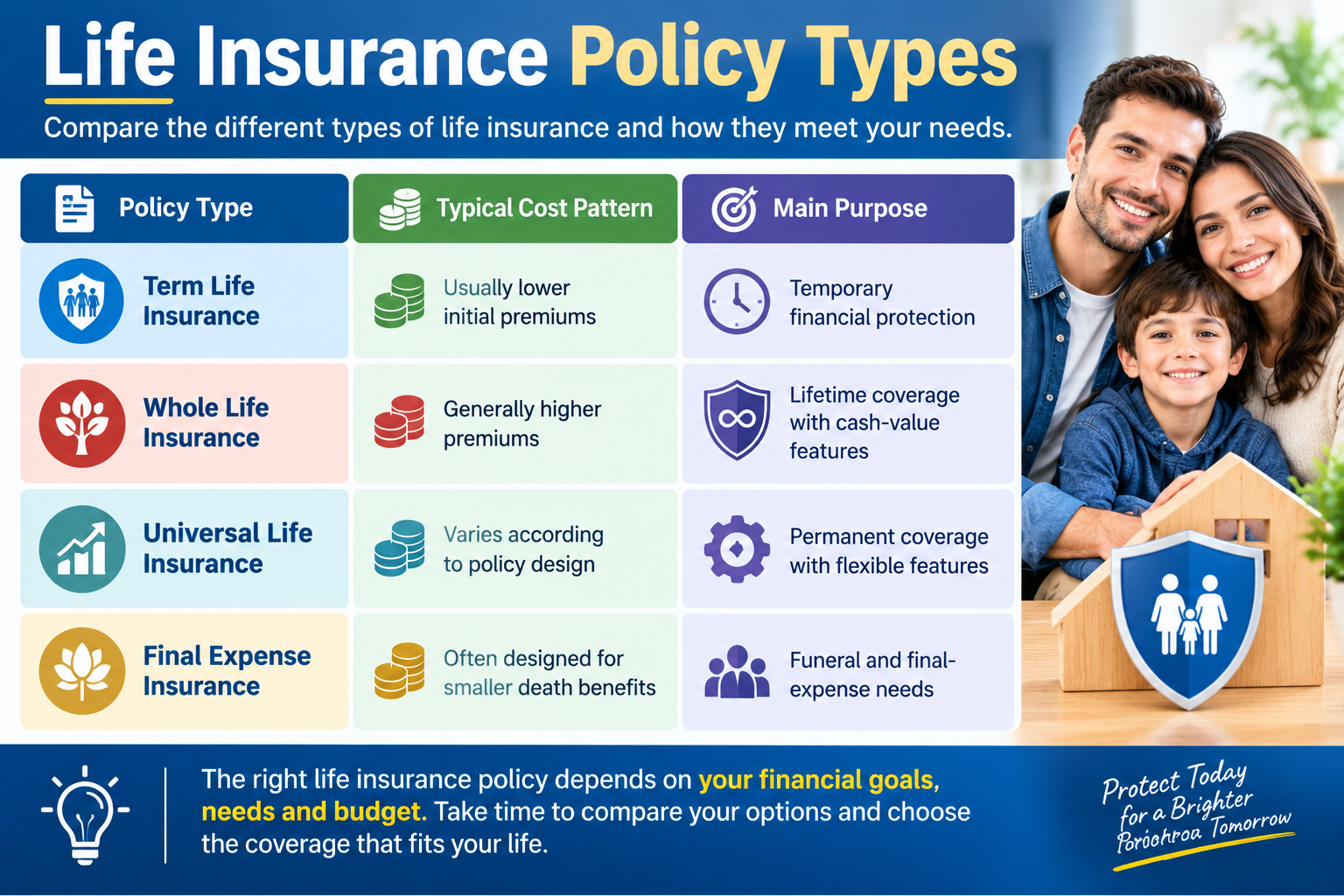
Term Life Insurance
Term life insurance provides coverage for a specified period.
For example, a policy might provide a death benefit for 20 years. If the insured person dies while the policy is in force and the claim meets the policy requirements, the insurer pays the applicable death benefit to the beneficiaries.
Advantages can include:
- Generally lower initial premiums
- Straightforward structure
- Fixed coverage period
- Ability to purchase substantial coverage at a relatively lower cost
Potential limitations include:
- Coverage is temporary
- The policy may expire if the term ends
- Renewal premiums can be higher
- Most term policies do not accumulate cash value
NAIC states that term insurance generally has lower premiums in the early years and is designed for a specified period.
Permanent Life Insurance
Permanent life insurance is designed to remain in force for life if policy requirements are met.
Common forms include:
- Whole life
- Universal life
- Variable life
- Variable universal life
Permanent policies can have cash-value components, but the details differ substantially among products.
Because these policies can include additional features and longer-term coverage, their premiums are generally higher than comparable term coverage.
Consumers should understand the policy’s guarantees, non-guaranteed values, fees, premium requirements, and potential risks before purchasing a permanent policy.
How Much Life Insurance Do You Need?
The cost question cannot be separated from the coverage question.
Buying a very small policy may produce a lower premium, but it may not provide enough money to meet your family’s financial needs.
The NAIC recommends considering questions such as:
- How much income do you provide?
- Who depends on you financially?
- What debts would remain after your death?
- What final expenses would your family face?
- How would your family pay housing and everyday expenses?
- Would children need future education funding?
- What other savings or assets would be available?
- How might inflation affect future financial needs?
NAIC’s consumer guidance emphasizes evaluating your financial responsibilities and deciding how much coverage is needed and for how long.
A Simple Way to Estimate Your Coverage Needs
There is no universal formula that works for every household, but you can start with a basic financial inventory.
Consider adding:
- Outstanding mortgage or housing debt
- Other significant debts
- Several years of income replacement
- Childcare and education expenses
- Final expenses
- Other financial obligations
Then consider subtracting assets that would realistically be available to your beneficiaries, such as existing savings or other financial resources.
This is only a starting point. A qualified insurance professional or financial professional can help you evaluate a more detailed needs analysis.
Does Employer Life Insurance Provide Enough Coverage?
Many workers receive some life insurance through an employer.
Employer-sponsored coverage can be valuable, but it may not always equal the amount of protection a household needs.
Before relying entirely on workplace coverage, check:
- The death-benefit amount
- Whether coverage changes when you leave the employer
- Whether you can convert or continue coverage
- Any employee-paid premiums
- Optional supplemental coverage
- Policy exclusions and limitations
NAIC advises consumers to evaluate whether employer-provided life insurance is sufficient for their individual circumstances.
How to Get Cheaper Life Insurance
The goal should not simply be to find the lowest advertised premium. The better objective is to find appropriate coverage at a sustainable price from a financially sound insurer.
Compare Multiple Quotes
After determining the type and amount of coverage you need, compare similar policies from multiple insurers.
Do not compare a $500,000 20-year term policy with a $250,000 10-year policy and assume the lower premium represents a better deal.
NAIC specifically recommends comparison shopping and comparing similar policies.
Buy Only the Coverage You Need
Over-insuring can unnecessarily increase premiums.
At the same time, under-insuring can leave your family exposed.
The goal is to match the policy to your actual financial responsibilities.
Maintain Healthy Habits
Some underwriting classifications can reflect health and lifestyle factors.
Maintaining a healthy lifestyle may support better health outcomes generally, although insurers determine eligibility and pricing according to their own underwriting rules.
Review Your Policy as Your Life Changes
Life insurance needs can change after:
- Marriage
- Divorce
- Birth or adoption of a child
- Buying a home
- Paying off major debt
- Starting a business
- Retirement
- Major changes in income
NAIC recommends reviewing life insurance periodically as financial circumstances change.
What About No-Exam Life Insurance?
Some insurers offer policies using accelerated or simplified underwriting that may not require a traditional medical examination.
However, “no exam” does not necessarily mean “no underwriting.”
The insurer may still ask health and lifestyle questions and use other information when evaluating an application.
Consumers should compare:
- Premium
- Coverage amount
- Policy duration
- Underwriting requirements
- Waiting periods, if applicable
- Exclusions
- Conversion options
- Renewal provisions
A no-exam policy may be convenient, but convenience should be weighed against price and coverage.
Related Reading on International News Gateway: Best Life Insurance Companies in the USA for Families and Seniors [2026 Guide]
Can Your Life Insurance Premium Increase?
It depends on the policy.
Some term policies provide level premiums for the stated term. Other policies may have different premium structures.
Permanent policies can also have different premium designs and may include guaranteed and non-guaranteed elements.
Before purchasing, ask:
- Is the premium guaranteed?
- Can the premium increase?
- What happens after the initial term?
- What are the renewal premiums?
- What happens if cash-value performance differs from an illustration?
- What minimum payment is required to keep the policy in force?
NAIC’s Life Insurance Buyer’s Guide encourages consumers to understand whether premiums and policy values are guaranteed and to consider future affordability.
Be Careful With Life Insurance Illustrations
Permanent life insurance illustrations can contain both guaranteed and non-guaranteed values.
A projected cash value or future benefit should not automatically be treated as a guaranteed result.
Ask the insurer or licensed professional to clearly explain:
- Guaranteed values
- Non-guaranteed values
- Premium requirements
- Fees and charges
- Cash-value assumptions
- Potential policy risks
- What happens if premiums are missed
The NAIC advises consumers to ask what parts of premiums or policy values are not guaranteed and to understand how policy values may change over time.
Should You Buy Life Insurance When You Are Young?
For people who have a genuine need for coverage, buying earlier can be worth considering because age is one factor used in life insurance pricing.
Young adults may also have financial responsibilities that increase over time, such as a mortgage, children, or business obligations.
At the same time, not everyone needs the same amount or type of insurance.
The best decision depends on:
- Dependents
- Income
- Debt
- Savings
- Family responsibilities
- Future financial goals
- Budget
- Existing employer coverage
LIMRA’s 2025 research found that younger adults substantially overestimated life insurance costs, suggesting that cost perceptions can be a barrier to considering coverage.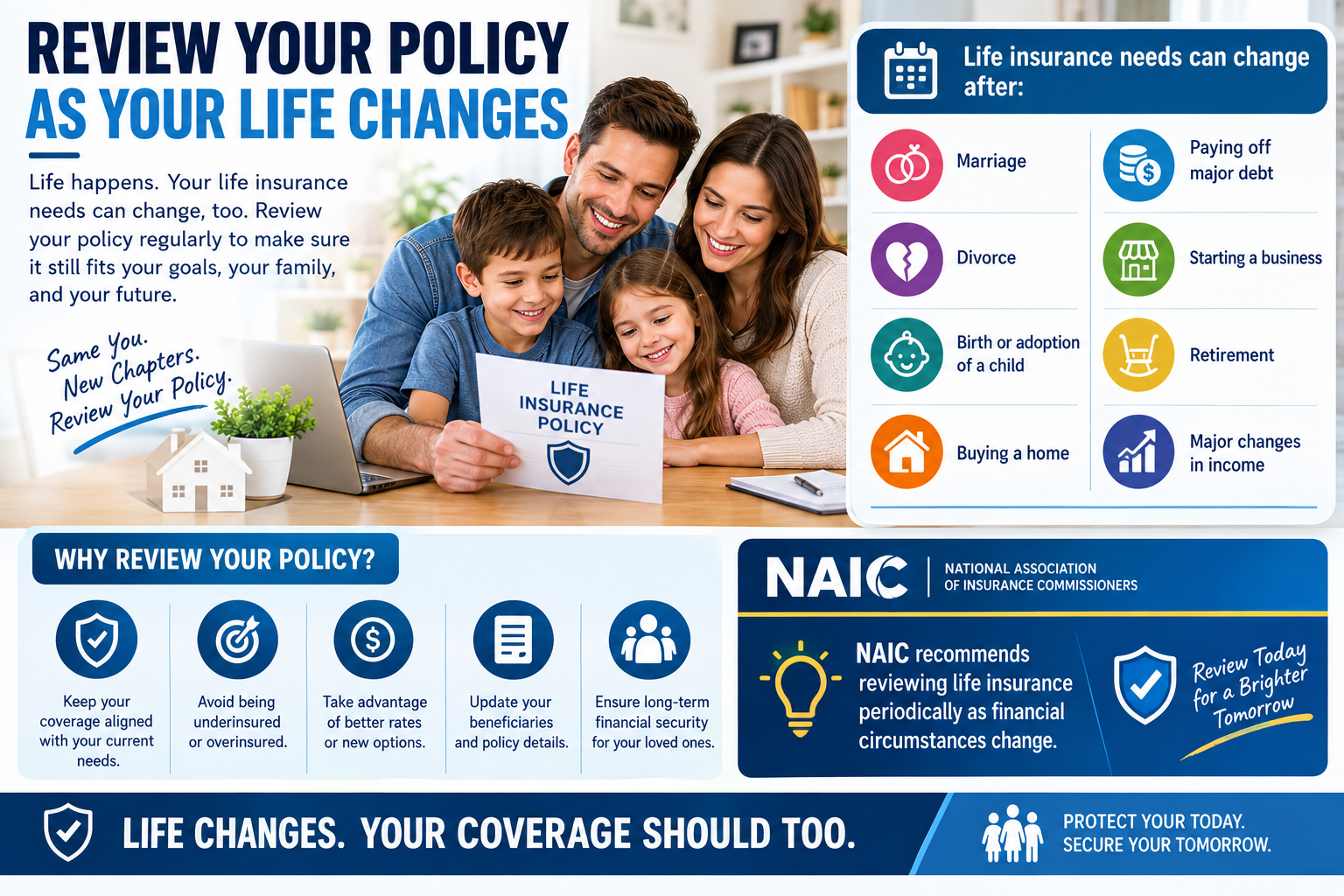
Life Insurance Cost for Families
Families often have more significant life insurance needs because several people may depend on one or two incomes.
Parents may want coverage to help provide for:
- Mortgage or rent
- Childcare
- Everyday household expenses
- Education
- Debt repayment
- Long-term income replacement
- Final expenses
A family does not necessarily need permanent insurance for every financial obligation. Some households may use term insurance to cover income-replacement needs during the years when children are dependent or a mortgage remains outstanding.
The appropriate structure depends on the family’s circumstances.
Life Insurance for Seniors
Life insurance can also be relevant later in life, but premiums generally increase with age.
Older consumers may consider coverage for different reasons, including:
- Final expenses
- Leaving money to beneficiaries
- Estate planning
- Supporting a surviving spouse
- Certain business or financial obligations
The available products, coverage amounts, underwriting requirements, and costs can vary substantially.
Consumers should compare the actual policy benefits and total expected premiums rather than focusing only on a low monthly payment.
Common Life Insurance Shopping Mistakes
Choosing the Cheapest Policy Without Comparing Coverage
A low premium is not automatically the best value.
Compare the policy’s coverage amount, term, exclusions, guarantees, renewal provisions, and financial strength of the insurer.
Buying Too Much or Too Little Coverage
The right policy should reflect your financial responsibilities.
Ignoring Renewal Costs
A term policy may become significantly more expensive if renewed later.
Understand the renewal schedule before buying.
Replacing an Existing Policy Too Quickly
NAIC advises consumers not to cancel an existing policy before obtaining and reviewing the replacement coverage. Replacing insurance can have financial consequences.
Treating Illustrations as Guaranteed Results
Non-guaranteed values should not be presented or understood as guaranteed outcomes.
Giving Incorrect Information
Applications should be completed accurately and honestly.
Incorrect information can create problems during underwriting and potentially affect coverage.
Questions to Ask Before Buying Life Insurance
Before purchasing a policy, consider asking the insurer or licensed insurance professional:
- What type of life insurance is this?
- How long does the coverage last?
- Is the premium guaranteed?
- Can the premium increase?
- What is guaranteed and what is not?
- What happens if I stop paying premiums?
- What are the renewal premiums?
- Does the policy build cash value?
- What fees or charges apply?
- Can the policy be converted?
- What exclusions apply?
- How financially strong is the insurance company?
- Is this policy appropriate for my actual financial needs?
Clear answers to these questions can make it easier to compare policies responsibly.
How to Compare Life Insurance Quotes
When comparing quotes, keep the major variables consistent.
For example:
| Comparison factor | Keep consistent when possible |
| Coverage amount | Same death benefit |
| Policy type | Term vs. term, or permanent vs. comparable permanent |
| Term length | Same number of years |
| Applicant information | Accurate age and health information |
| Tobacco status | Same disclosure |
| Payment schedule | Compare equivalent payment structures |
| Riders | Compare the same or similar riders |
This makes it easier to determine whether one insurer is actually offering a better price for comparable coverage.
Is Life Insurance Worth the Cost?
For someone whose death would create a significant financial burden for others, life insurance can be an important part of financial protection.
For someone without dependents or significant financial obligations, the need may be different.
The key question is not simply:
“How cheap can I make my life insurance?”
A better question is:
“How much financial protection does my household need, and what policy can I realistically afford to maintain?”
A policy that becomes unaffordable and lapses may not provide the long-term protection the buyer originally intended.
What Has Changed in the U.S. Life Insurance Market in 2026?
Life insurance remains an important part of the U.S. financial protection market.
LIMRA reported that U.S. individual life insurance new annualized premium exceeded $17.5 billion in 2025, a record year for the industry. Term life insurance represented about 17% of individual life new premium, while whole life represented about 37% and indexed universal life about 25%. These figures describe industry sales, not what an individual consumer should expect to pay.
LIMRA also launched its 2026 Insurance Barometer research in July 2026, examining changing consumer expectations around flexibility, relevance, and value in life insurance.
These market statistics should not be interpreted as a prediction of your personal premium. Individual pricing remains dependent on the policy and applicant.
Related Reading on International News Gateway: USA Life Secret: What No One Tells You
Final Thoughts: How Much Does Life Insurance Cost in the USA?
So, how much does life insurance cost in the USA?
There is no single national price.
A healthy young adult seeking a modest term policy may qualify for a relatively low premium, while an older applicant, a smoker, someone with certain health conditions, or someone seeking a large permanent policy may pay considerably more.
The most important factors include:
- Age
- Health
- Tobacco use
- Coverage amount
- Policy term
- Type of insurance
- Underwriting classification
- Insurer
- Optional riders and policy features
Term life insurance is generally less expensive than permanent coverage in the early years, while permanent policies may provide lifetime coverage and cash-value features at a higher cost.
For consumers, the smartest approach is to determine the amount of protection actually needed, compare comparable policies from financially sound insurers, understand the guarantees and limitations, and choose a premium that can realistically be maintained.
Life insurance should be evaluated as financial protection, not simply as another monthly expense.
Sources and Further Reading
- National Association of Insurance Commissioners (NAIC) — Life Insurance: NAIC Life Insurance Consumer Information
- NAIC — Life Insurance Buyer’s Guide: NAIC Life Insurance Buyer’s Guide
- LIMRA — 2025 Insurance Barometer Study: LIMRA 2025 Insurance Barometer Study
- LIMRA — U.S. Individual Life Insurance Sales: LIMRA 2025 Life Insurance Sales Results
- Google Search Central — Helpful, Reliable, People-First Content: Google Search Central Guidance
Editorial Disclaimer
This article is provided for general educational and informational purposes only. It is not an offer to sell insurance and does not constitute financial, investment, legal, tax, or insurance advice. Life insurance premiums, eligibility, benefits, underwriting standards, policy features, and availability vary by insurer, applicant, state, and policy. Readers should review policy documents carefully and consider consulting a licensed insurance professional or appropriate financial adviser for advice based on their individual circumstances.
Editorial note: InternationalNewz.com should update this article when material regulatory, market, or consumer-information changes occur. Statistics and market information should be attributed to their original sources rather than presented as guarantees or personalized quotes.