

How to Build an Internet on Mars: The Technology Behind a Future Martian Network
The idea of an internet on Mars sounds like science fiction, but the basic technologies needed for a planetary communication network are already being developed and tested. Current Mars missions use orbiting spacecraft as communication relays, while NASA, ESA, and other research organizations are studying higher-bandwidth optical communications, autonomous networking, and future satellite infrastructure.
A Martian internet, however, would not simply be an enlarged version of the internet on Earth. The enormous distance between Earth and Mars creates unavoidable communication delays, while dust, terrain, spacecraft positioning, limited power, and the lack of existing infrastructure create additional engineering challenges.
For future astronauts and robotic missions, the goal will not be to eliminate those limitations. Instead, engineers will need to build a local Mars communication network that can continue operating independently while maintaining periodic connections with Earth.
Why Building an Internet on Mars Is So Difficult
The biggest challenge is distance.
Earth and Mars follow different orbits around the Sun, so the distance between them changes substantially. Depending on their positions, the planets can be tens of millions to hundreds of millions of kilometers apart.
Because information cannot travel faster than light, communication between the two planets will always involve a delay. Depending on the planets’ positions, a one-way signal can take several minutes, meaning a normal back-and-forth conversation would be impossible.
That distinction is important.
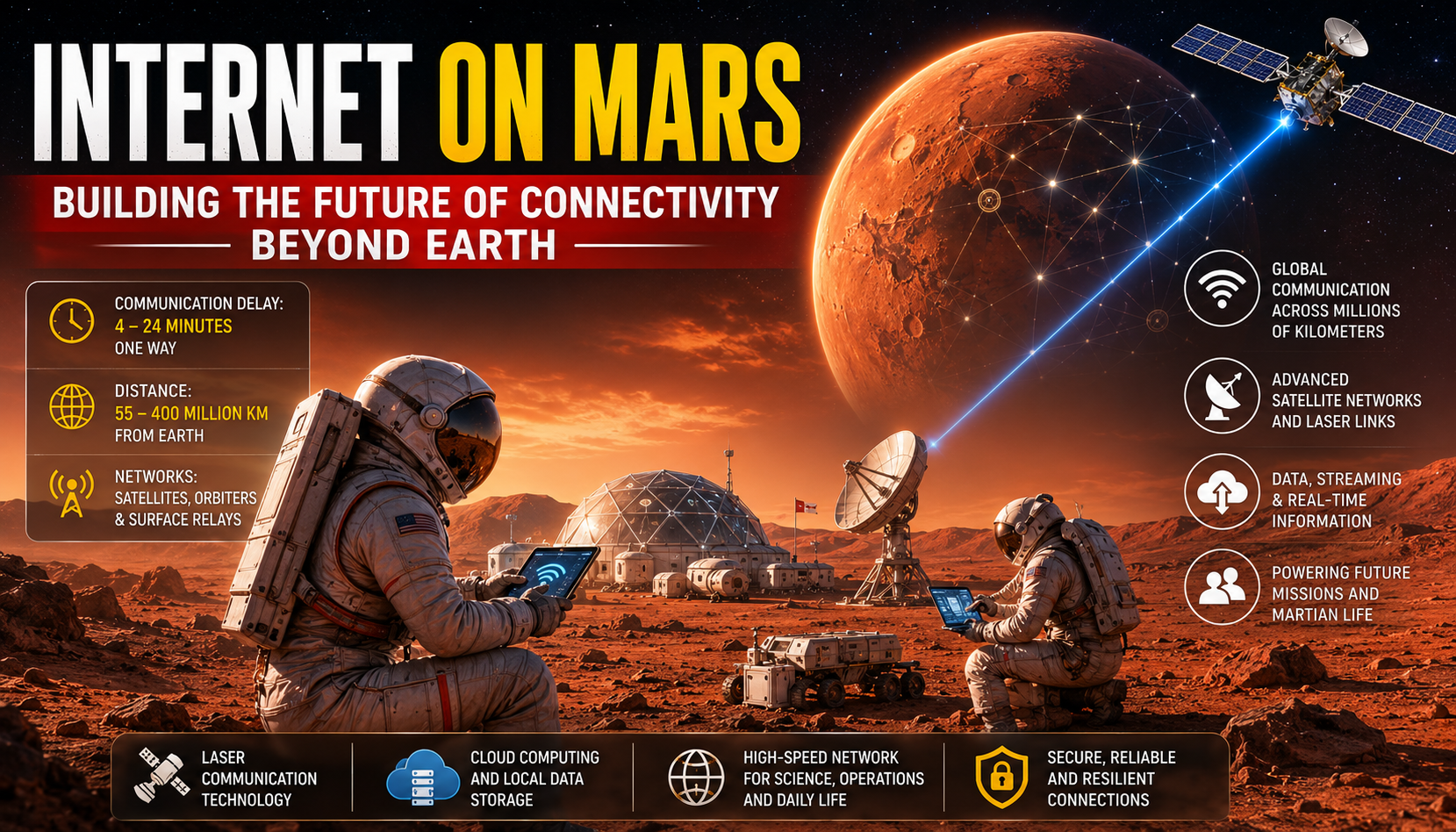
Future astronauts will not be able to use an Earth-based internet connection in the same way people do today. A request sent from Mars could not receive an immediate response from a server on Earth.
Instead, a practical internet on Mars would need to operate as a local network, with information stored and processed on or near the planet. Earth would function more like a connected but distant network rather than the central server for every Martian activity.
This architecture would allow astronauts to communicate locally, operate equipment, access stored information, and exchange data between different Martian locations without waiting for a signal to travel between planets.
Mars Already Has a Basic Communication Network
Although Mars does not have an internet service in the conventional sense, robotic missions already use a sophisticated communications infrastructure.
NASA’s Mars rovers typically communicate with Earth either directly or through orbiting spacecraft. Orbiters can receive information from a rover on the surface and relay it to Earth-based antennas.
Spacecraft including Mars Reconnaissance Orbiter, Mars Odyssey, and MAVEN have supported communications with surface missions. ESA’s Trace Gas Orbiter has also played an important role in communicating with Mars surface assets.
This relay architecture provides an early example of what a future planetary network could look like.
A rover does not necessarily need a direct, continuous connection with Earth. Instead, it can transmit information to an orbiter when the spacecraft are correctly positioned. The orbiter then forwards the information toward Earth.
For robotic exploration, this approach works well. A permanent human settlement, however, would require substantially greater capacity, reliability, coverage, and automation.
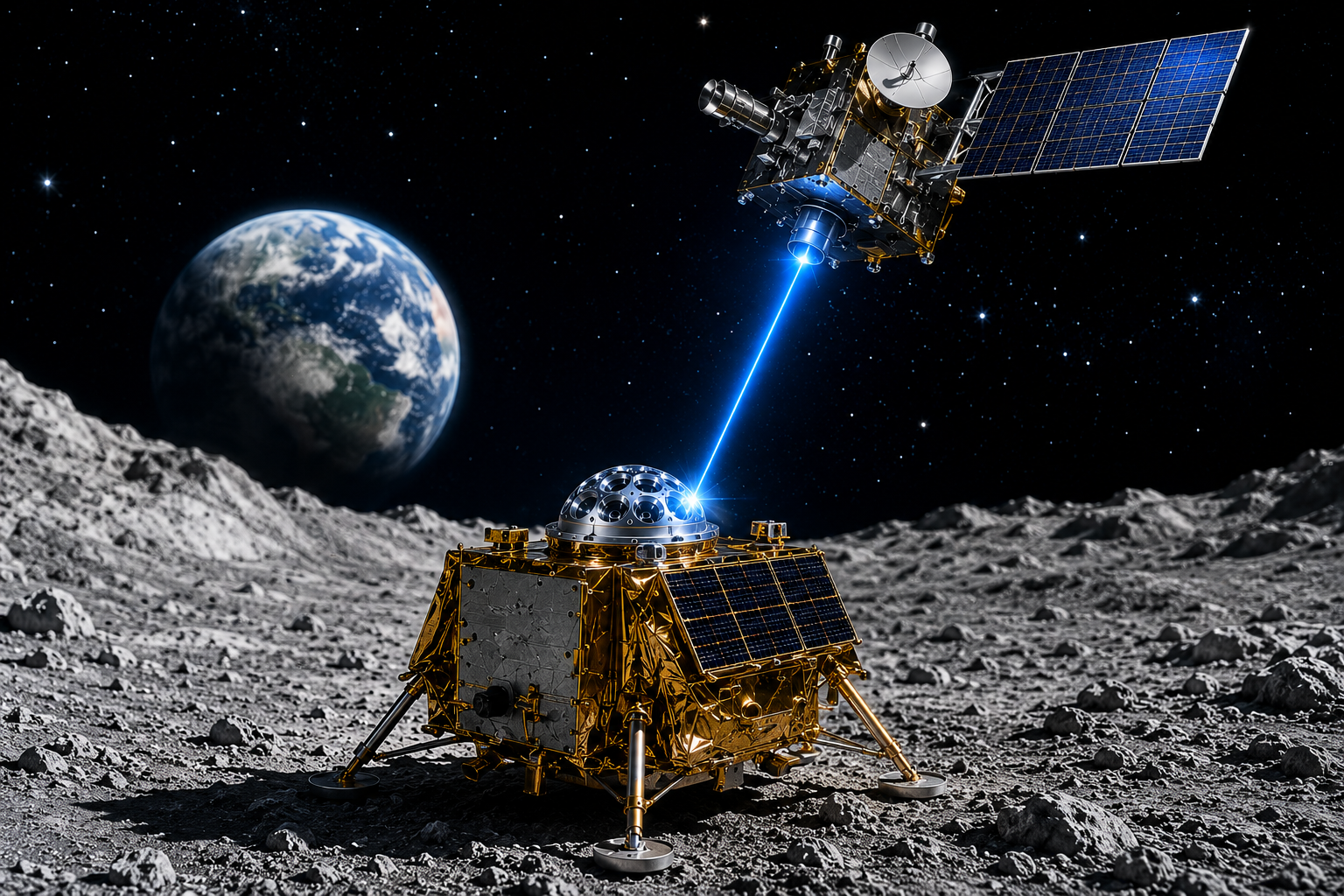
A Future Mars Network Could Use Dedicated Satellites
One of the most logical steps toward a Martian internet would be establishing a dedicated constellation of communication satellites around Mars.
These satellites could perform several functions:
- Relay data between surface locations and Earth.
- Provide communication coverage for astronauts and rovers.
- Support navigation and positioning.
- Connect research stations separated by large distances.
- Route information around local network failures.
- Provide backup communication paths during emergencies.
The basic concept resembles satellite communications used on Earth, but the network would be designed specifically for Mars.
A constellation could also reduce dependence on a single spacecraft. If one satellite became unavailable, other satellites could potentially provide alternative communication paths.
Over time, the network could expand as additional missions arrive. Early spacecraft might provide limited coverage, while later missions could add more satellites and increase capacity.
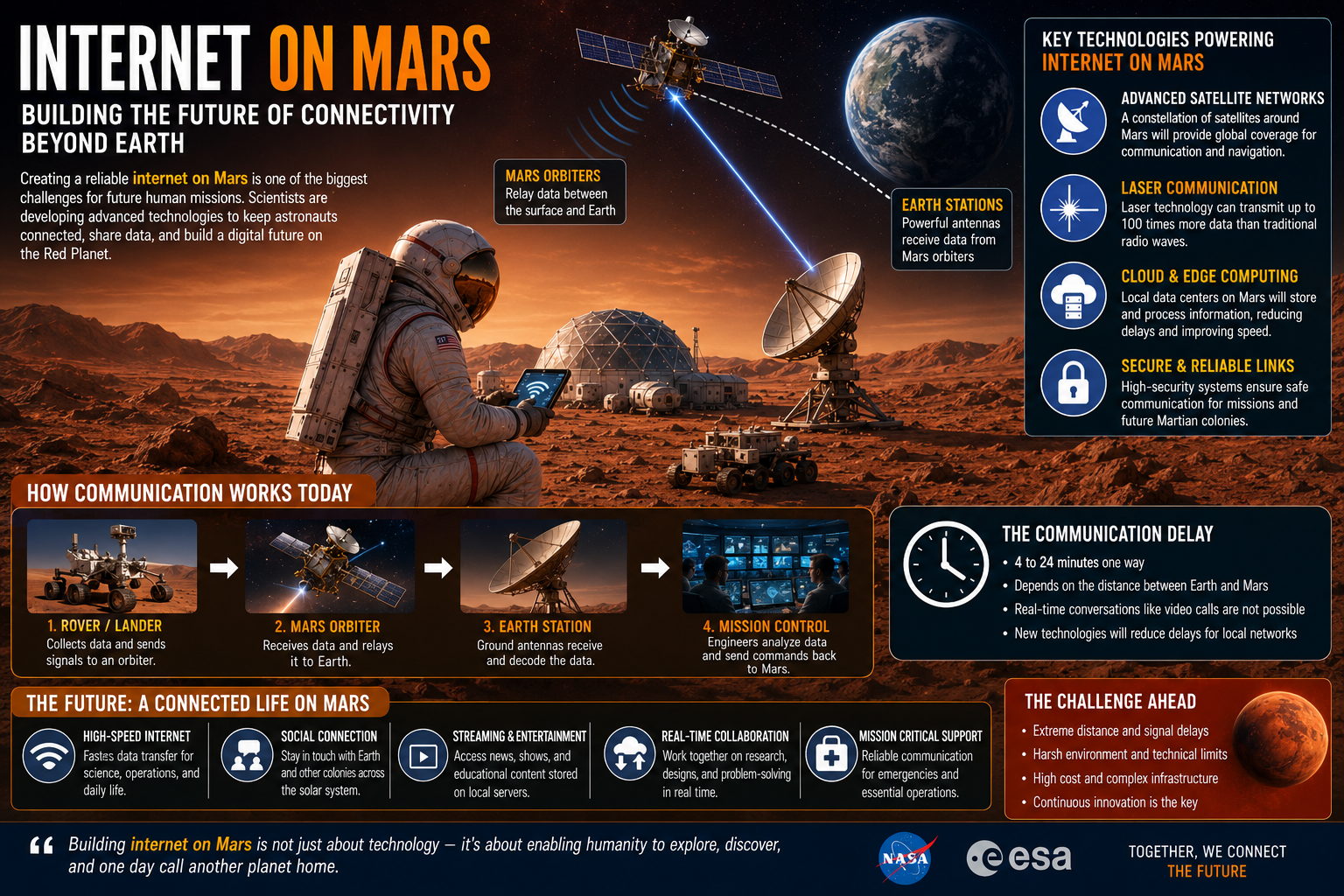
Laser Communication Could Make Mars Data Transfer Much Faster
Radio communication has been the foundation of deep-space communications for decades, but optical or laser communication offers an important potential advantage: much higher data rates.
NASA’s Deep Space Optical Communications experiment demonstrated the potential of laser-based communication over extremely large distances. Instead of transmitting information primarily through radio frequencies, optical systems encode information into laser light.
For future Mars missions, this could dramatically increase the amount of information transmitted between spacecraft and Earth.
Higher bandwidth could make it easier to transfer scientific datasets, high-resolution imagery, engineering information, and other large files.
However, laser communication is not a perfect solution.
Optical systems require highly accurate pointing because the transmitted beam is much narrower than a conventional radio signal. Spacecraft must therefore maintain precise alignment with their communication targets.
Weather can also affect ground-based optical communication because clouds and atmospheric conditions can interfere with laser signals.
For that reason, future Mars communications will probably use a combination of technologies rather than relying on a single system.
Mars Needs a Local Internet, Not Just a Connection to Earth
The most important concept in designing an internet on Mars is local autonomy.
Consider a simple example. An astronaut wants to access a technical manual stored on a server in a Martian settlement. If the request had to travel to Earth and return, the delay would make the experience extremely slow.
Instead, frequently used information could be stored locally on Mars.
A Martian network could maintain local copies of:
- Technical manuals
- Scientific databases
- Maps
- Medical references
- Educational materials
- Software
- Entertainment
- Mission documentation
- Engineering data
- Communication records
The system could synchronize important information with Earth whenever a suitable connection is available.
This would create something closer to a store-and-forward planetary internet. Local services could operate continuously, while Earth-Mars synchronization would occur according to communication windows and network conditions.
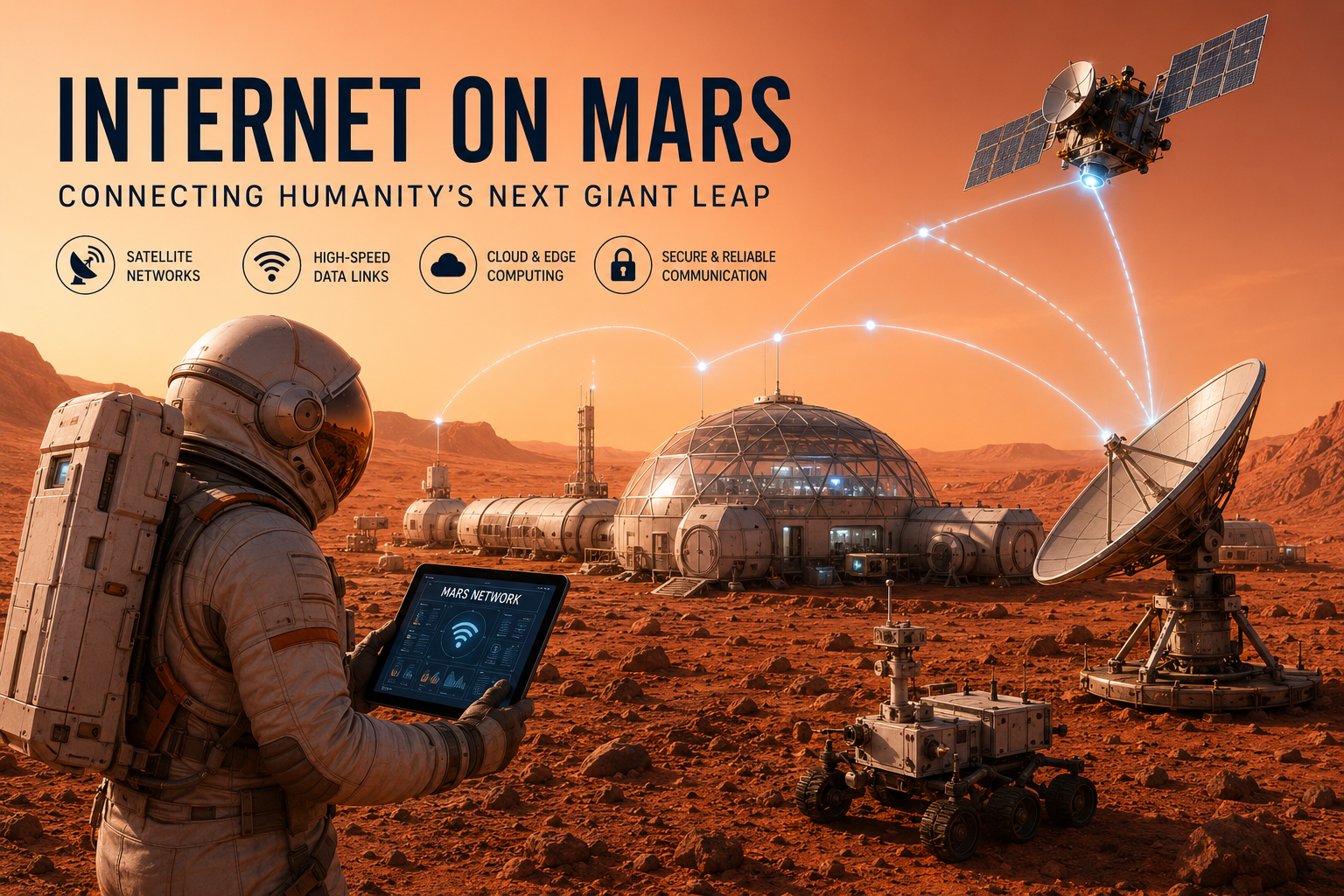
Edge Computing Could Improve Digital Services on Mars
Local computing will be just as important as connectivity.
Instead of sending every request to Earth-based data centers, future Mars settlements could operate their own computing infrastructure.
This approach is known as edge computing: data processing occurs close to the people or machines generating the data.
For example, a rover could process sensor information locally instead of transmitting every raw measurement to Earth. A research station could analyze scientific data on-site and send only the most important results back to Earth.
Artificial intelligence systems could also operate locally, helping astronauts analyze images, monitor equipment, manage inventories, and process scientific observations without requiring an immediate Earth connection.
Local computing would therefore reduce bandwidth requirements while making Martian operations more responsive.
Mars Internet Could Connect Rovers, Habitats and Scientific Stations
As human exploration expands, the network would need to support many different types of users.
A future Mars communication system could connect:
Astronauts: Personal devices, spacesuits, habitat systems, and scientific equipment.
Rovers: Autonomous vehicles collecting geological and environmental data.
Habitats: Life-support monitoring, power systems, environmental sensors, and internal communications.
Research stations: Scientific instruments and laboratories distributed across the Martian surface.
Orbital spacecraft: Communication relays, navigation systems, and Earth links.
Robotic equipment: Construction machines, exploration vehicles, and maintenance systems.
These devices would need to exchange information locally even when Earth is temporarily unavailable.
That makes a planetary network fundamentally different from today’s Earth internet.
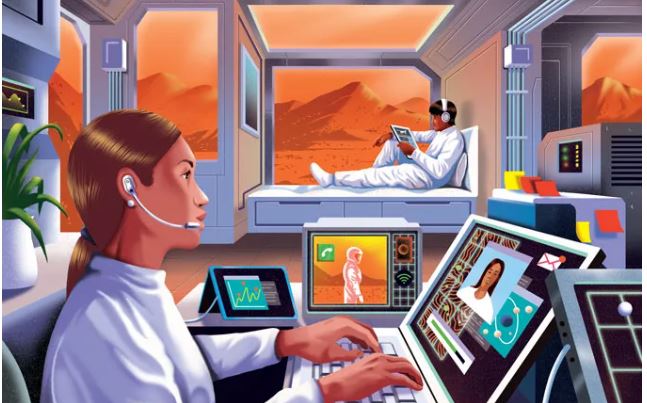
Navigation Could Become Another Major Function
A Martian satellite network could potentially provide more than communication.
Earth has GPS and other satellite navigation systems that allow devices to determine their location. Mars does not currently have an equivalent global positioning system designed for routine surface users.
Future communication satellites could potentially provide navigation and timing services for spacecraft and surface vehicles.
This would be valuable for autonomous rovers, cargo vehicles, scientific missions, and astronauts traveling away from established habitats.
Accurate positioning could also help spacecraft land near existing infrastructure rather than requiring each mission to operate independently.
As the number of missions increases, navigation and communication infrastructure could become increasingly interconnected.
Mars Communication Must Survive Harsh Environmental Conditions
Building network infrastructure on Mars presents environmental challenges that do not exist on Earth in the same form.
The Martian atmosphere is extremely thin, and dust can accumulate on equipment and solar panels. Large dust storms can also reduce available sunlight and affect surface operations.
Equipment must therefore be designed to withstand:
- Extreme temperature changes
- Dust accumulation
- Radiation
- Limited atmospheric protection
- Long periods of reduced sunlight
- Mechanical wear
- Communication interruptions
- Power limitations
Redundancy will be critical.
A future settlement cannot depend on a single communication tower or satellite. Engineers will likely need multiple communication routes, backup power systems, redundant hardware, and autonomous fault detection.
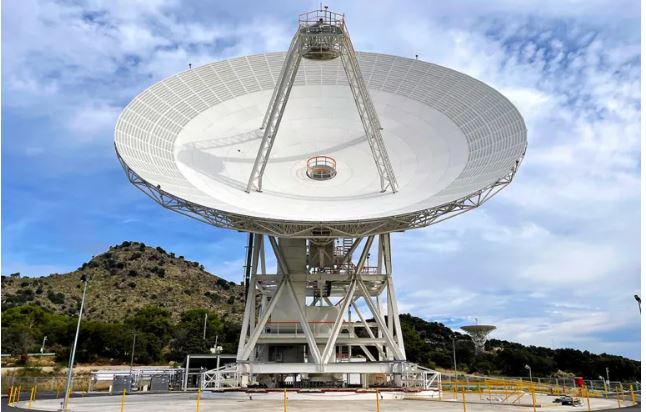
Earth and Mars Will Remain Connected—but Not in Real Time
Even with advanced technology, no future network can remove the fundamental speed-of-light delay between Earth and Mars.
That means the internet experience on Mars will be fundamentally different from today’s Earth-based services.
Live video conversations with Earth may not feel like normal video calls because responses cannot arrive instantly. Instead, communication systems could emphasize asynchronous messaging, recorded video, automated responses, and local digital assistants.
For example, an astronaut could send a recorded message to Earth. Mission personnel could respond later, and the reply would be delivered when the communication link becomes available.
For routine activities, local Martian networks would provide much faster interaction.
This division between local real-time networking and delayed interplanetary communication could become one of the defining characteristics of the future internet beyond Earth.
NASA and ESA Technologies Could Help Build the Foundation
NASA and ESA are already developing technologies that could contribute to future planetary communication systems.
NASA’s Artemis-related communications work and ESA’s lunar communication initiatives are providing experience with networking spacecraft and surface assets around another celestial body.
The Moon is much closer to Earth than Mars, making it a useful testing environment for technologies such as navigation, optical communications, relay satellites, and autonomous networking.
Lessons learned from lunar missions could eventually be adapted for Mars.
The transition would still require significant additional development because Mars presents longer communication delays and more complex operational conditions.
Nevertheless, lunar infrastructure can serve as an important technological stepping stone.
What a Martian Internet Could Look Like
A mature internet on Mars could eventually consist of several interconnected layers.
At the surface, astronauts, rovers, habitats, laboratories, and sensors would form local networks.
Above the planet, communication satellites would relay traffic between distant surface locations and provide connections to Earth.
Optical and radio systems could connect orbital spacecraft with Earth-based stations.
Local data centers could store information and run applications for Martian users.
Autonomous network-management software could identify failures and reroute traffic without waiting for instructions from Earth.
The result would not be an exact copy of Earth’s internet. It would be a planetary communication ecosystem designed around Mars’s unique environment.
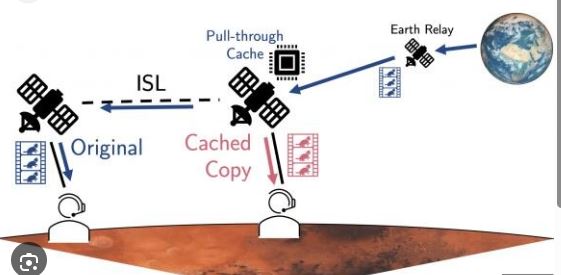
The Long-Term Future of Internet on Mars
A permanent human presence on Mars would require much more than rockets, habitats, power systems, and life-support technology.
Communication infrastructure would be equally important.
Scientists and engineers would need to establish networks capable of operating over enormous distances, supporting autonomous operations, surviving harsh conditions, and handling communication delays between planets.
The first Martian network may be relatively simple, perhaps consisting of a few orbiters and surface communication systems. Over time, additional satellites, ground stations, computing facilities, and optical communication links could expand its capabilities.
Eventually, separate settlements could become connected through a planetary network, while periodic high-bandwidth links would connect Mars with Earth.
The result could be a new kind of internet—one designed not around instant global communication, but around local autonomy, delayed interplanetary connections, redundancy, and scientific collaboration.
Final Takeaway
Building an internet on Mars is technically challenging, but many of its fundamental building blocks already exist. Mars missions are using orbital communication relays today, while NASA and international partners are developing optical communications, advanced networking, autonomous systems, and lunar communication infrastructure that could contribute to future Mars missions.
The most important breakthrough will not be finding a way to eliminate the communication delay between Earth and Mars. Physics makes that impossible.
Instead, the solution is to build a network that works without depending on Earth for every interaction.
Local satellites, surface networks, edge computing, optical links, autonomous routing, and distributed data storage could eventually allow astronauts to communicate, conduct research, operate vehicles, and access digital services across Mars.
A true Martian internet therefore represents more than faster communication. It would be part of the infrastructure needed to make long-term human exploration of Mars practical and sustainable.
Editorial note: This article is for general informational and educational purposes. Concepts such as large-scale Martian satellite constellations, planetary data centers, and permanent Mars settlements remain areas of research and future planning rather than established services. Specific mission plans and technologies may change as space agencies and researchers conduct further testing.





прикольные анекдоты в приложении
Всё шуточки
Смешные картинки в приложении
Всё шуточки
Новинки света https://womanfashion.com.ua моды, красоты, шопинга, шоу-бизнеса, развлечений и стиля жизни
Что такое шутка? Как с помощью прикольных шуток развить чувство юмора
https://telegra.ph/Smeshnye-shutki-i-kak-razvit-chuvstvo-yumora-09-23
Онлайн журнал для женщин https://stylewoman.kyiv.ua предлагает актуальные советы по красоте, здоровью, моде и саморазвитию. Узнайте, как ухаживать за собой, поддерживать баланс в жизни, строить карьеру и развивать личные отношения. Практические рекомендации для уверенности и успеха в каждой сфере жизни.
Дадим кредит https://kapitosha.net/kak-poluchit-nalichnye-v-kredit-na-summu-150-tysyach-rublej.html или ипотеку на выгодных условиях. Удобный подбор предложений, онлайн-заявки для быстрого получения финансовой поддержки.
Что такое шутка? Как с помощью прикольных шуток улучшить чувство юмора
https://telegra.ph/Smeshnye-shutki-i-kak-razvit-chuvstvo-yumora-09-23
Занимаемся сдачей в аренду комплектов плавсредств https://baidak.ru и байков для самоорганизованных речных сплавов. Исследуем маршруты для самоорганизованных речных сплавов и оформляем краткие путеводители. Мы работаем для тех кто любит свободу и независимость в планировании путешествия, а так же творческих личностей, которые хотят реализовать собственные проекты комплектов плавсредств и байков для самоорганизованных речных сплавов.
Компания VOROTA TOP https://vorota-top.ru предлагает более 3000 моделей автоматических ворот различных типов открывания, автоматики и моделей, чтобы удовлетворить потребности самых требовательных клиентов. Мы также осуществляем изготовление ворот на заказ, подбор подходящей автоматики и профессиональный монтаж с последующей пуско-наладкой. На все виды работ и оборудование предоставляется гарантия, что подчеркивает нашу ответственность и качество предоставляемых услуг.
Свежие новости https://musicbit.com.ua мира шоу бизнеса. Популярные диеты, советы психолога, тонкости отношений
Женский портал о моде https://gracefullady.kyiv.ua красоте, здоровье и саморазвитии. Советы, тренды и вдохновение для современной женщины.
Портал женского https://fines.com.ua и мужского здоровья. Лечение остеохондроза. Компьютерная вытяжка поясничного, грудного, шейного отделов
Что такое смешные картинки и как они появились
Онлайн-журнал https://fashionadvice.kyiv.ua для успешных девушек
Более 500 000 человек желающих завести знакомства заполярный без регистрации бесплатно, 200 новых знакомств на сайте каждую минуту. Регистрируйтесь – это быстро и бесплатно.
Create porn videos with AI generated porn, free AI generated videos.
Как улучшить настроение другу с помощью шутки https://anekdotymemy.wordpress.com/2024/09/16/podnat-nastroenie/
Как поднять настроение другу с помощью смешных картинок и мемов https://telegra.ph/Podnimaem-nastroenie-smeshnymi-kartinkami-i-anekdotami-09-16
Create porn videos with Pornpen, free AI generated videos.
официальный сайт пин ап казино http://www.pin-up-kz.belproc.ru casino me http://www.pin-up-kz.belproc.ru .
Ежедневные автомобильные новости https://simpsonsua.com.ua и статьи, тесты, характеристики и подбор машины
Авто статьи https://setbook.com.ua с советами по ремонту и обслуживанию вашего авто
blacksprut blacksprut com официальный
blacksprut сайт blacksprut даркнет
radio cd alarm clocks https://www.top-clocks.com
ремонт холодильников в новогиреево ремонт холодильников площадь гагарина
химера серч телеграмм himera searching bot
Мы предлагаем индивидуальные программы реабилитации и комплексное лечение зависимостей, а цены на лечение от алкоголизма и наркомании в Казахстане обеспечивает профессиональные консультации врачей и точную диагностику для восстановления здоровья.
lucky jet бонусы лаки джет онлайн
дом престарелых в московской области пансионат для пожилых
Нужен качественный машина ремонт услуги профессионального автосервиса по ремонту автомобиля, цены, отзывы.
купить контрольную работу контрольная робота
Химера сёрч бот https://himera-official.ru по поиску и пробиву информации о человеке в Телеграм
Откройте для себя преимущества и функциональность Pin-Up https://apk.fightcampconditioning.com узнайте, как установить и использовать приложение Pin-Up, совместимое с различными устройствами, такими как Samsung Galaxy, OnePlus, Xiaomi, iPhone, iPad.
Скачайте приложения для Андроид бесплатно на https://appcatalogue.ru лучшие программы и игры на русском языке для вашего устройства. Установите приложения прямо сейчас и наслаждайтесь их функционалом!
Для подключения и оплаты обратитесь в электросети. По телефону или в личный кабинет по адресу проживания
Для защиты прав детей и недееспособных вы можете обратиться в органы опеки по телефону или адресу проживания
Новые новости политики https://mostmedia.com.ua общества, спорта, культуры, новости дня о событиях
Самые свежие новости https://vesti.in.ua Украины и мира. Последние новости Украины, новости дня онлайн. Новости политики, экономики, свежие новости спорта, новости Украины и мира 2024
Ежедневные автомобильные новости https://viewport.com.ua и статьи, тесты, характеристики авто и выбор машины
Последние новости https://ua-novosti.info Украины и мира, политические и аналитические статьи, курсы валют, индексы и котировки, интервью, мнения, бизнес новости
Женский журнал https://miymalyuk.com.ua обо всем полезном для женщин и девушек
драгон мани казино официальный сайт Dragon Money
Портал для современной женщины https://ladyone.kyiv.ua все о знаменитостях, шоу-бизнесе, последних новостях моды и полезных советах
Женский портал https://feminine.kyiv.ua все о семье, детях, красоте и здоровье
Женский онлайн-журнал https://fashiontop.com.ua мода, красота, диеты, звезды, отношения
Купить Смартфоны https://iq-techno.ru Apple iPhone (Эпл Айфон) по самым выгодным ценам в интернет-магазине DNS. Широкий выбор товаров и акций. В каталоге можно ознакомиться с ценами, отзывами, фотографиями и подробными характеристиками товаров, а также подобрать Смартфоны Apple iPhone (Эпл Айфон) по параметрам.
Познавательный портал https://detiwki.com.ua для детей
сделать реферат https://magistr51.ru
купить квартиру от застройщика недорого жк Санкт-Петербурга купить квартиру